



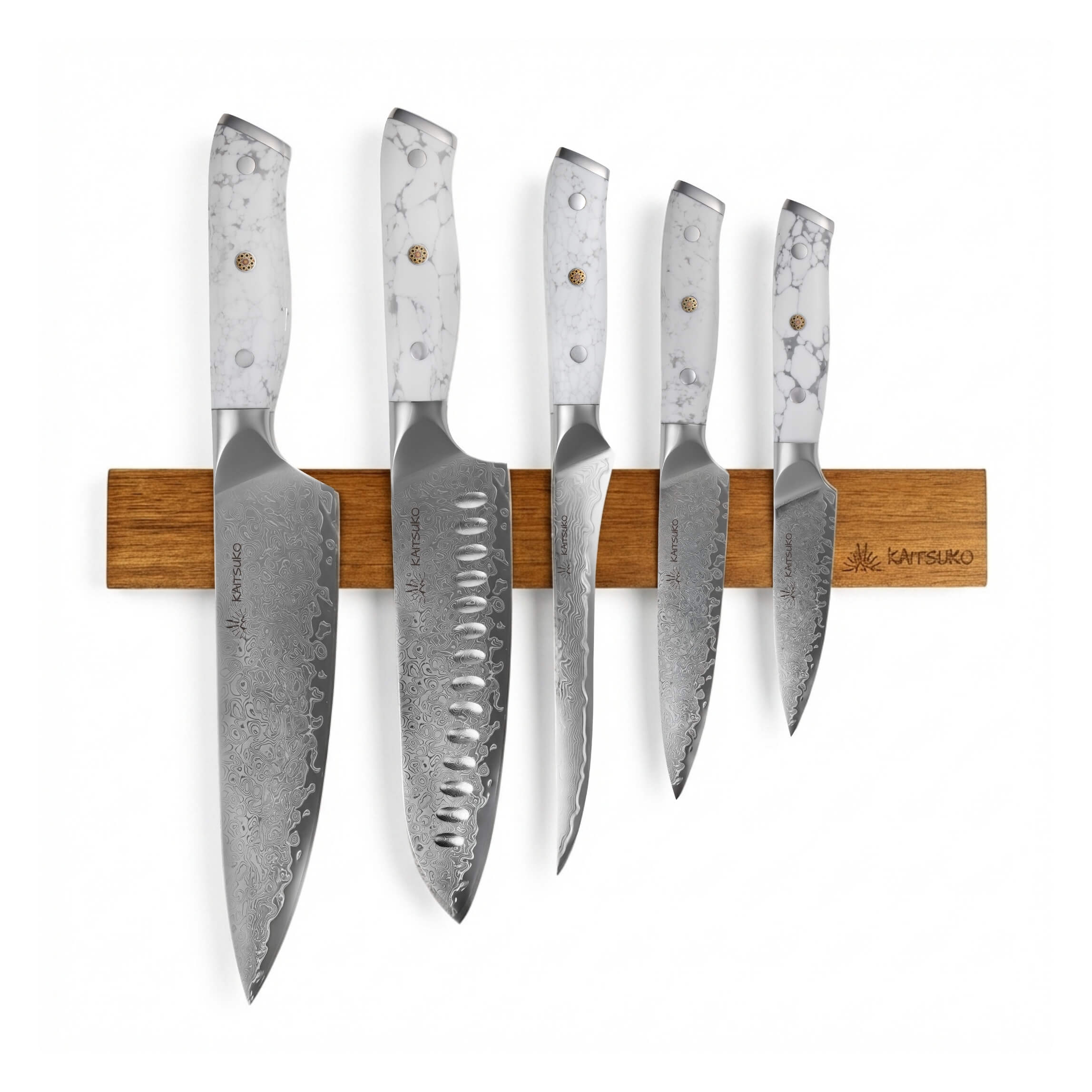
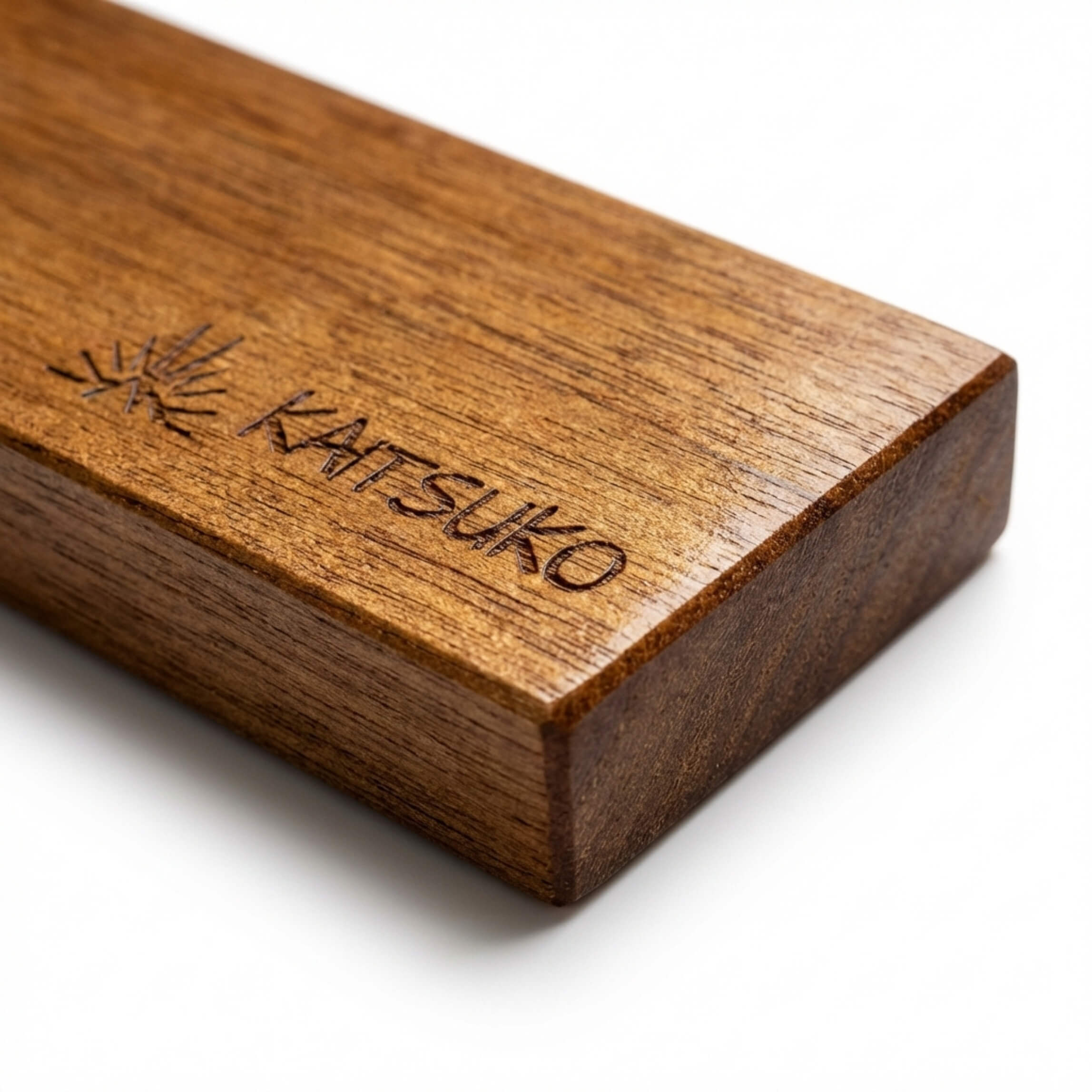
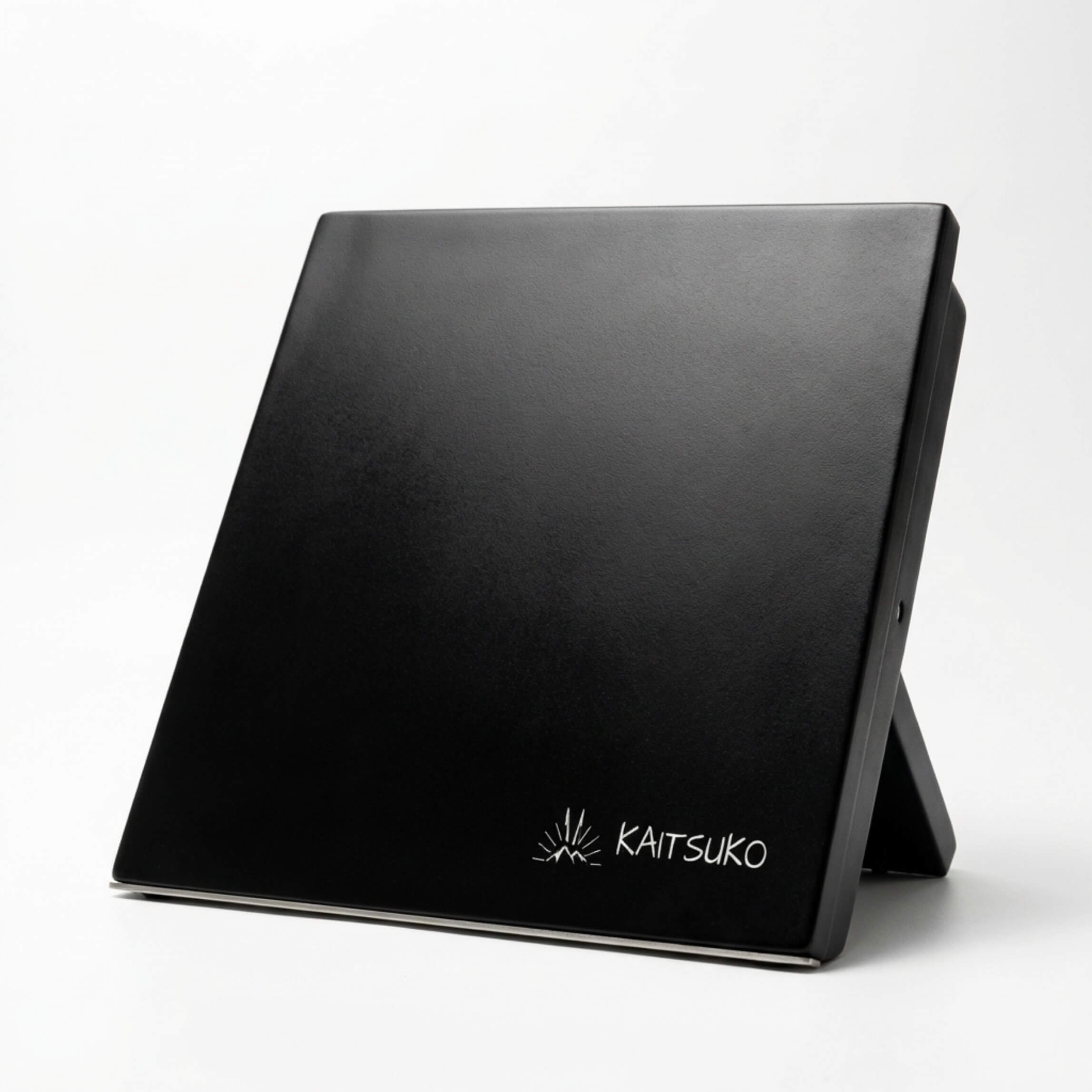
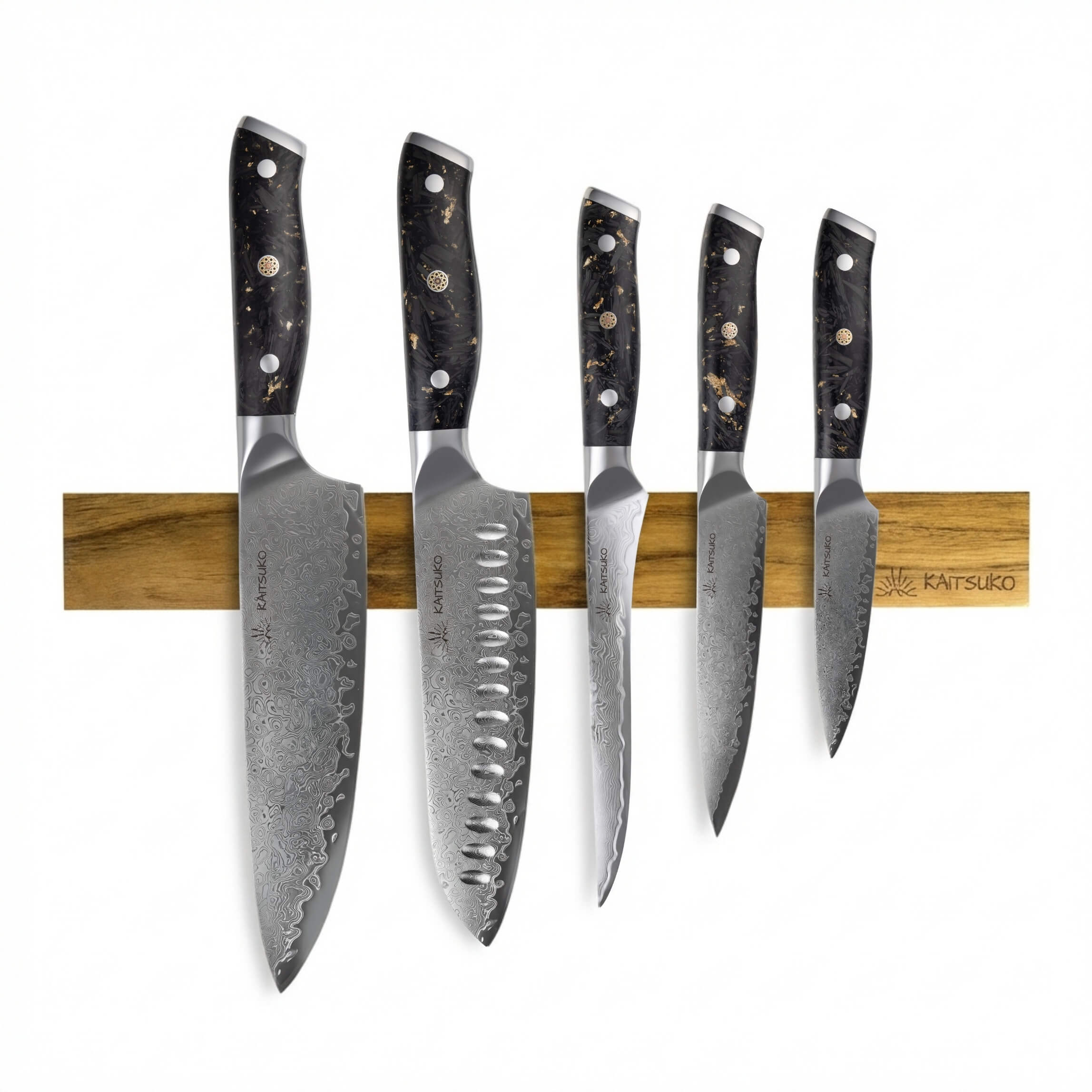
Magnetic Wall Mount Knife Holder


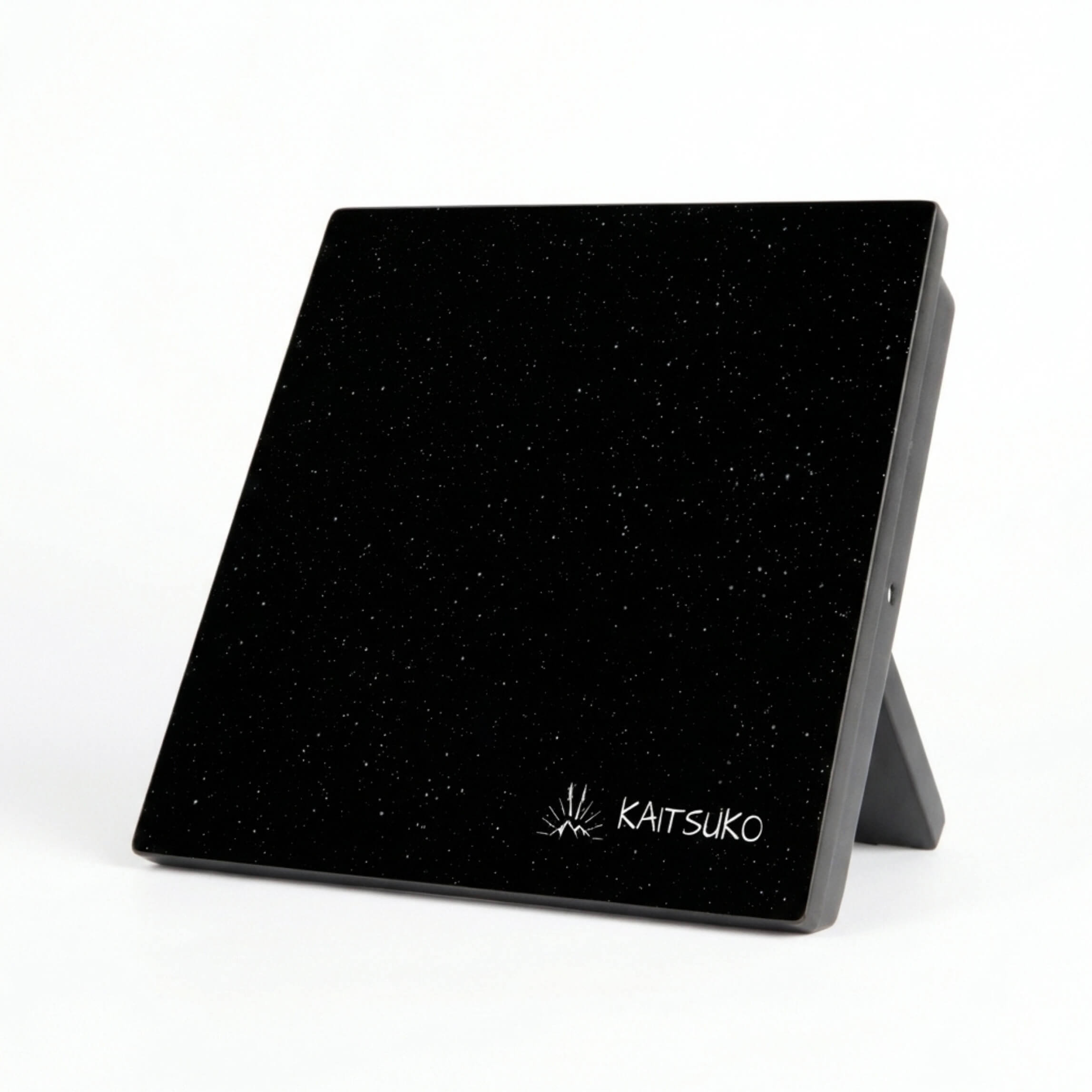
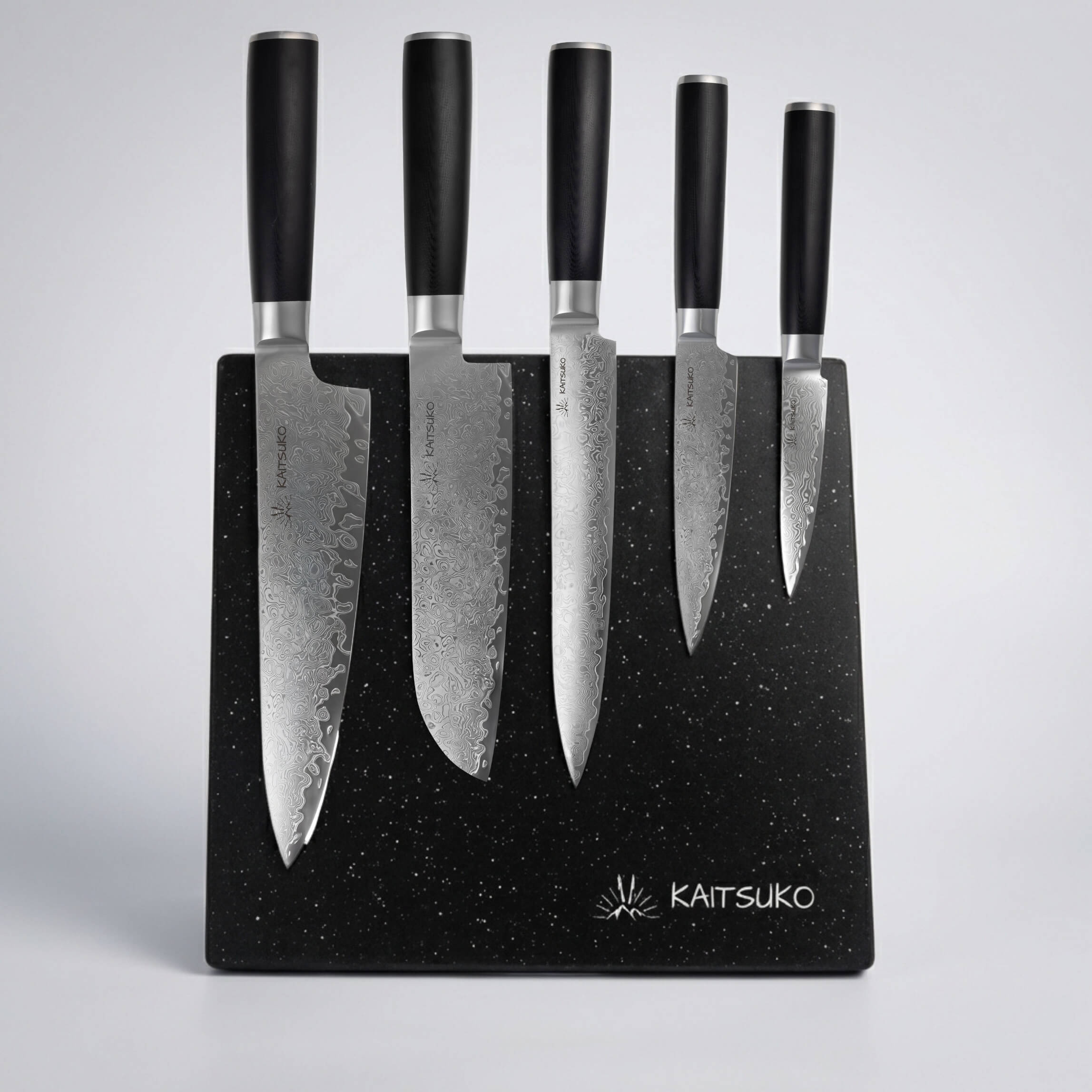


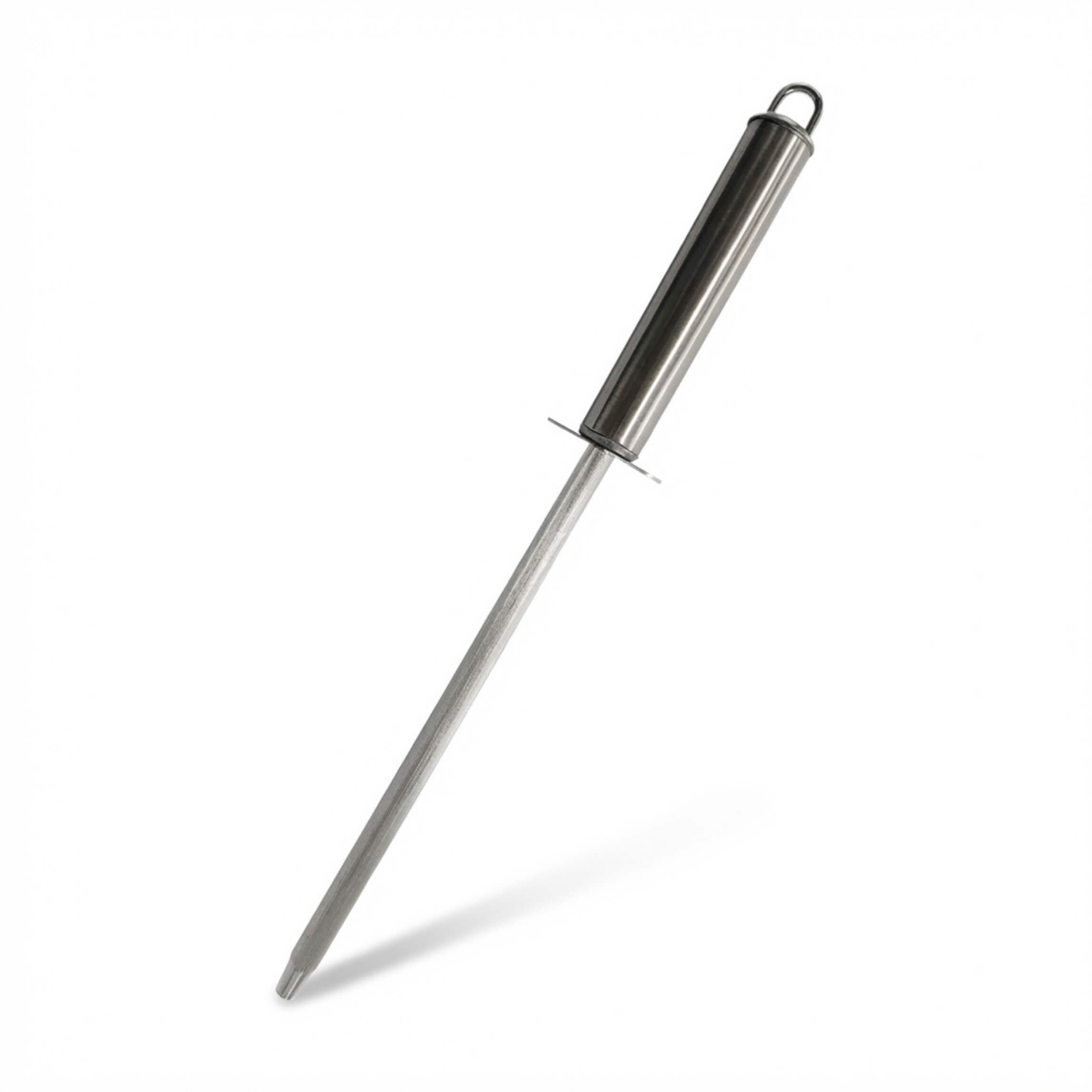
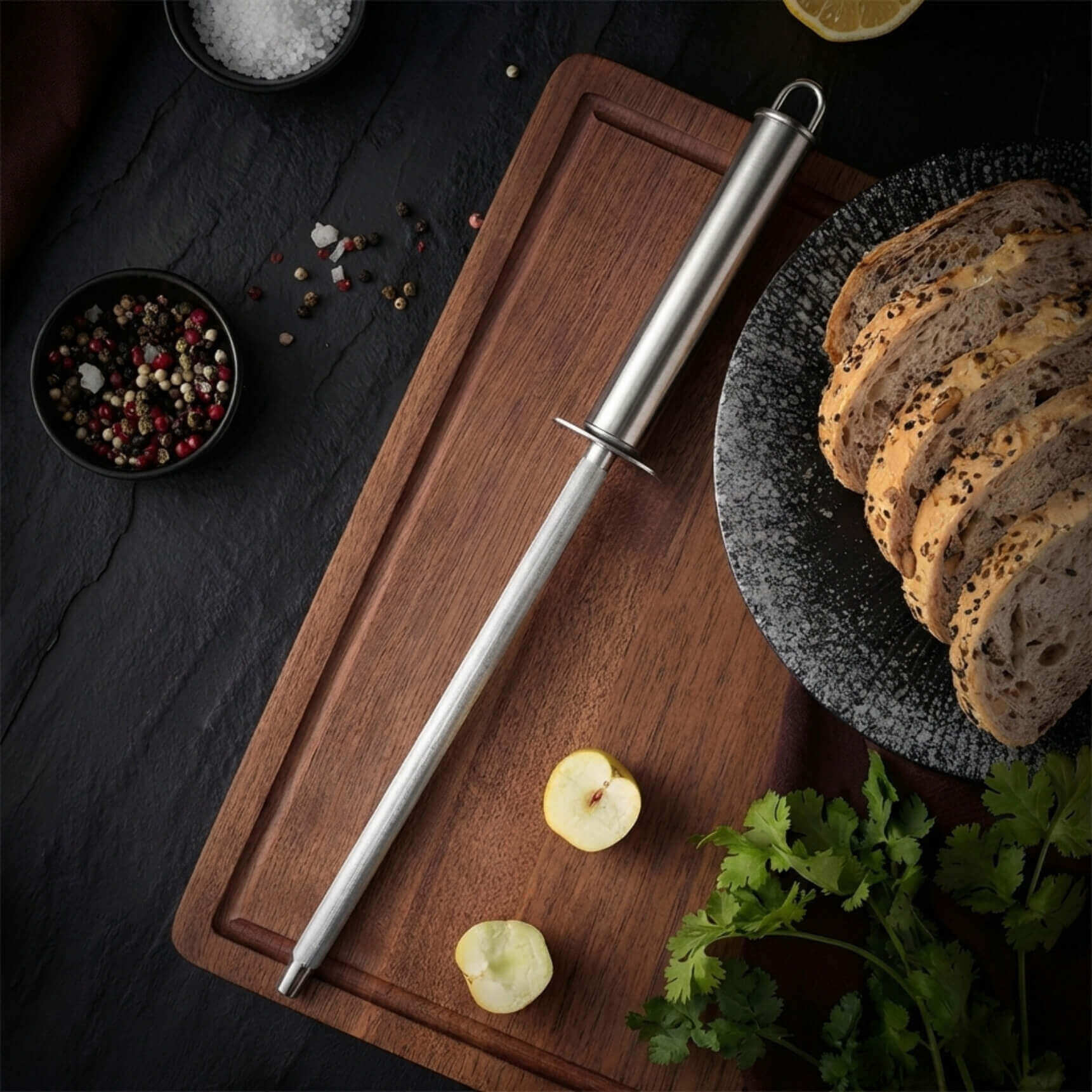
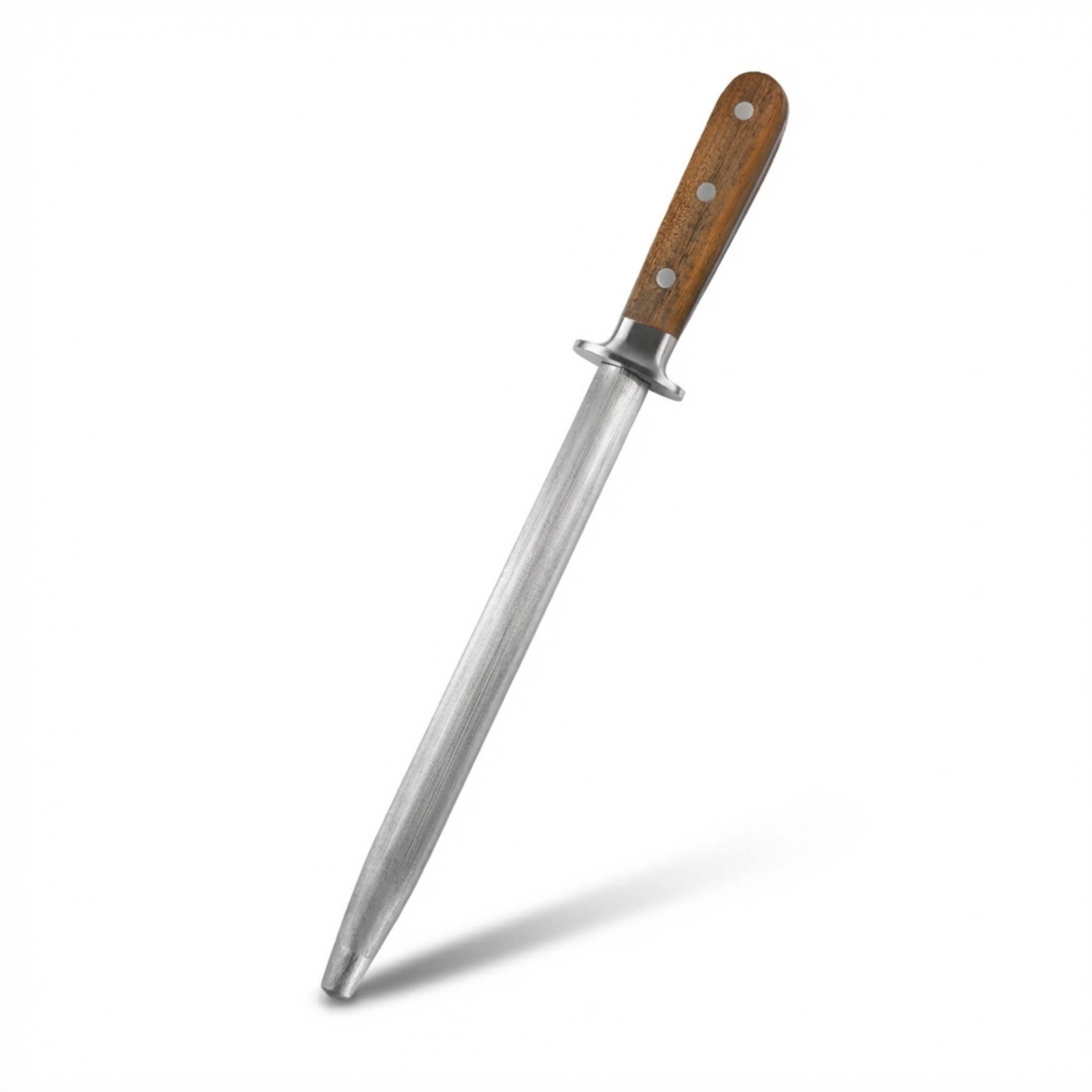
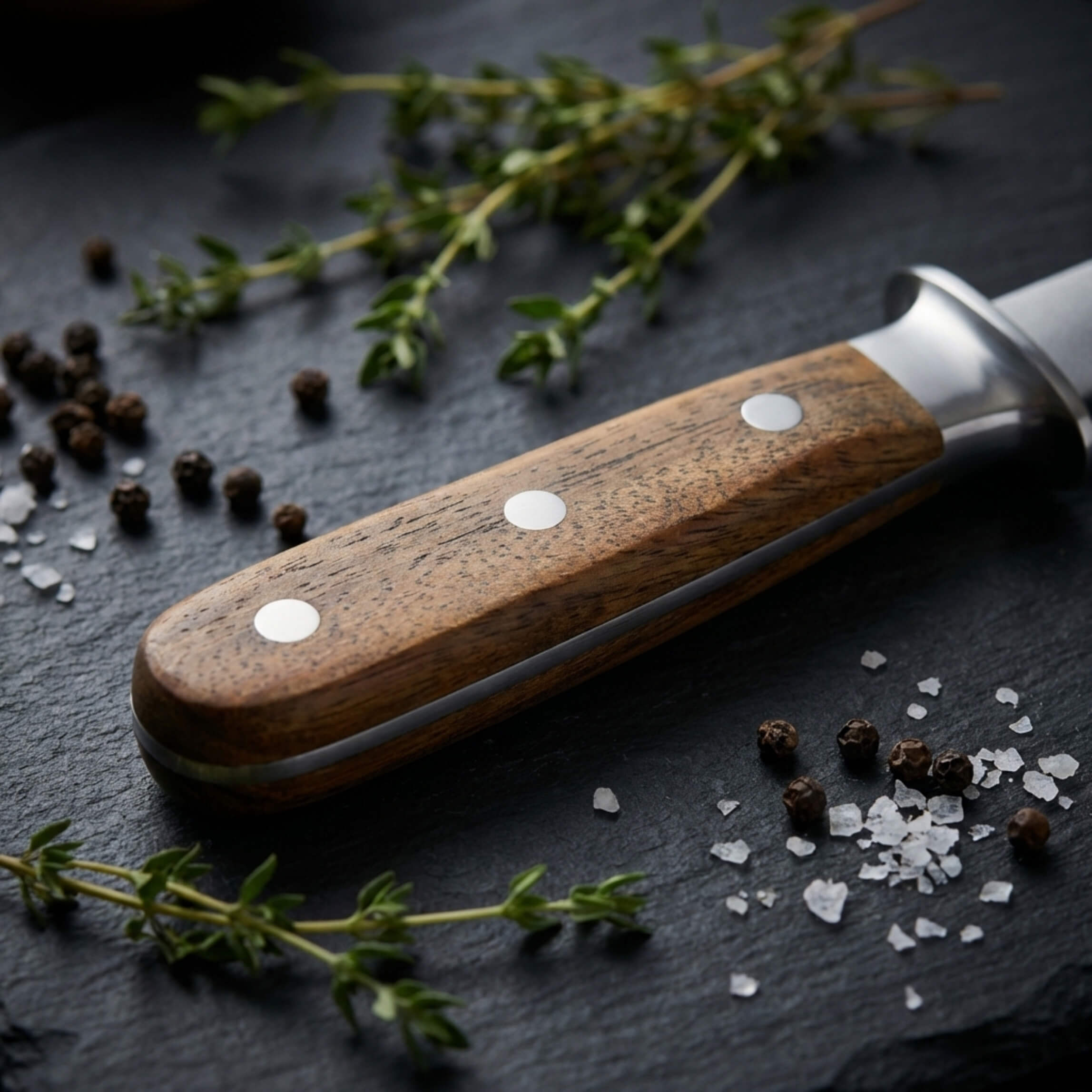
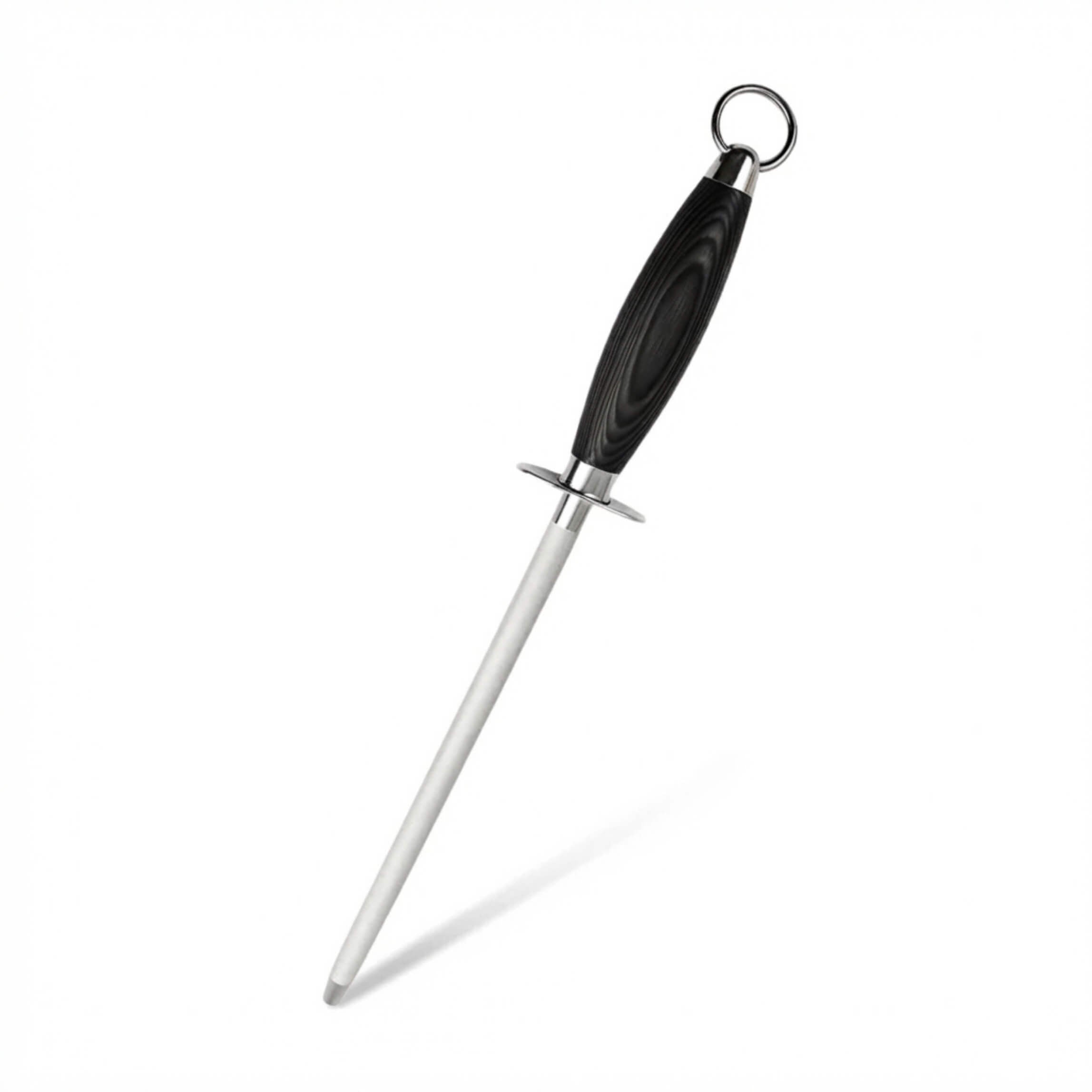
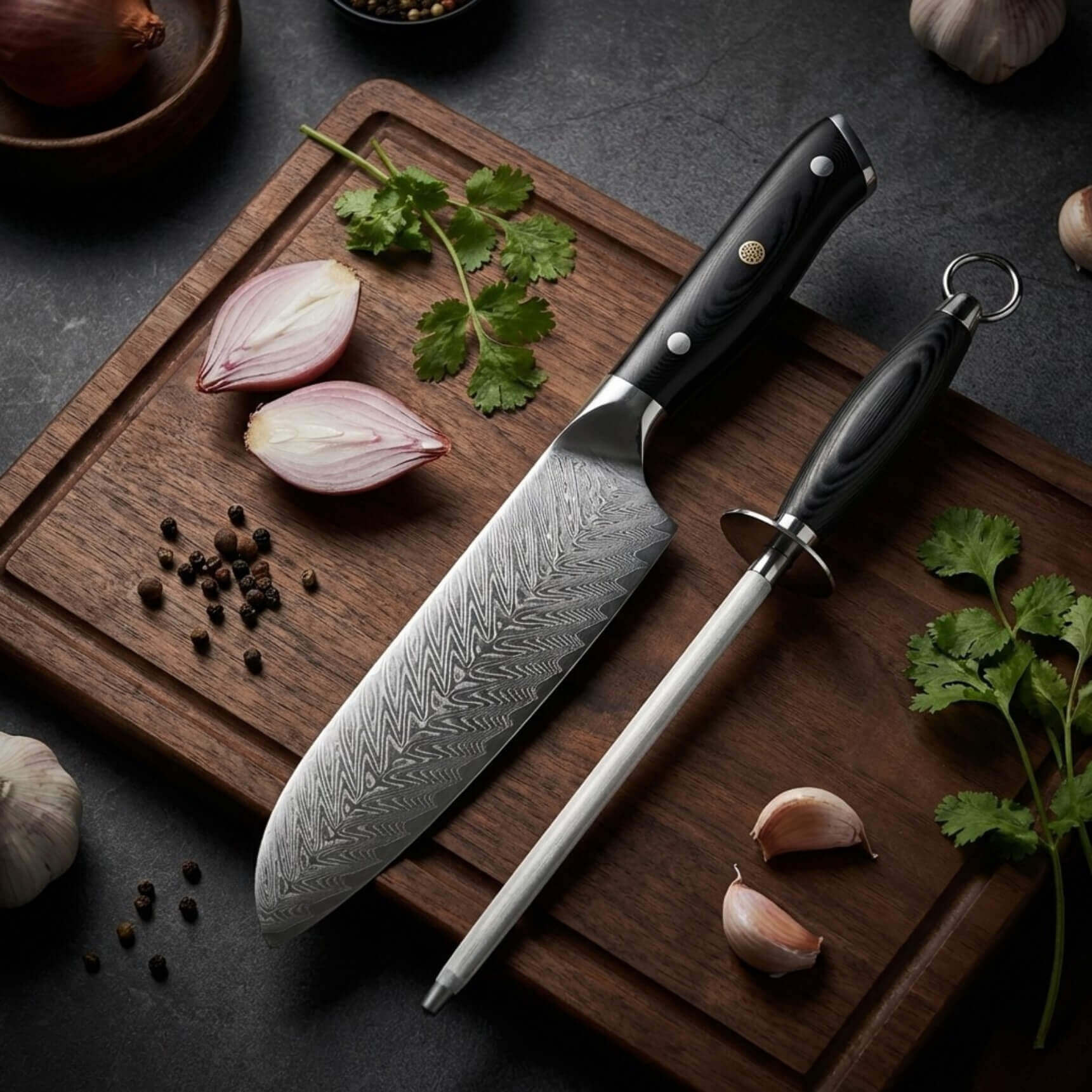
Sharpening steel - Wooden handle




Wooden Cutting Board - 28x20cm


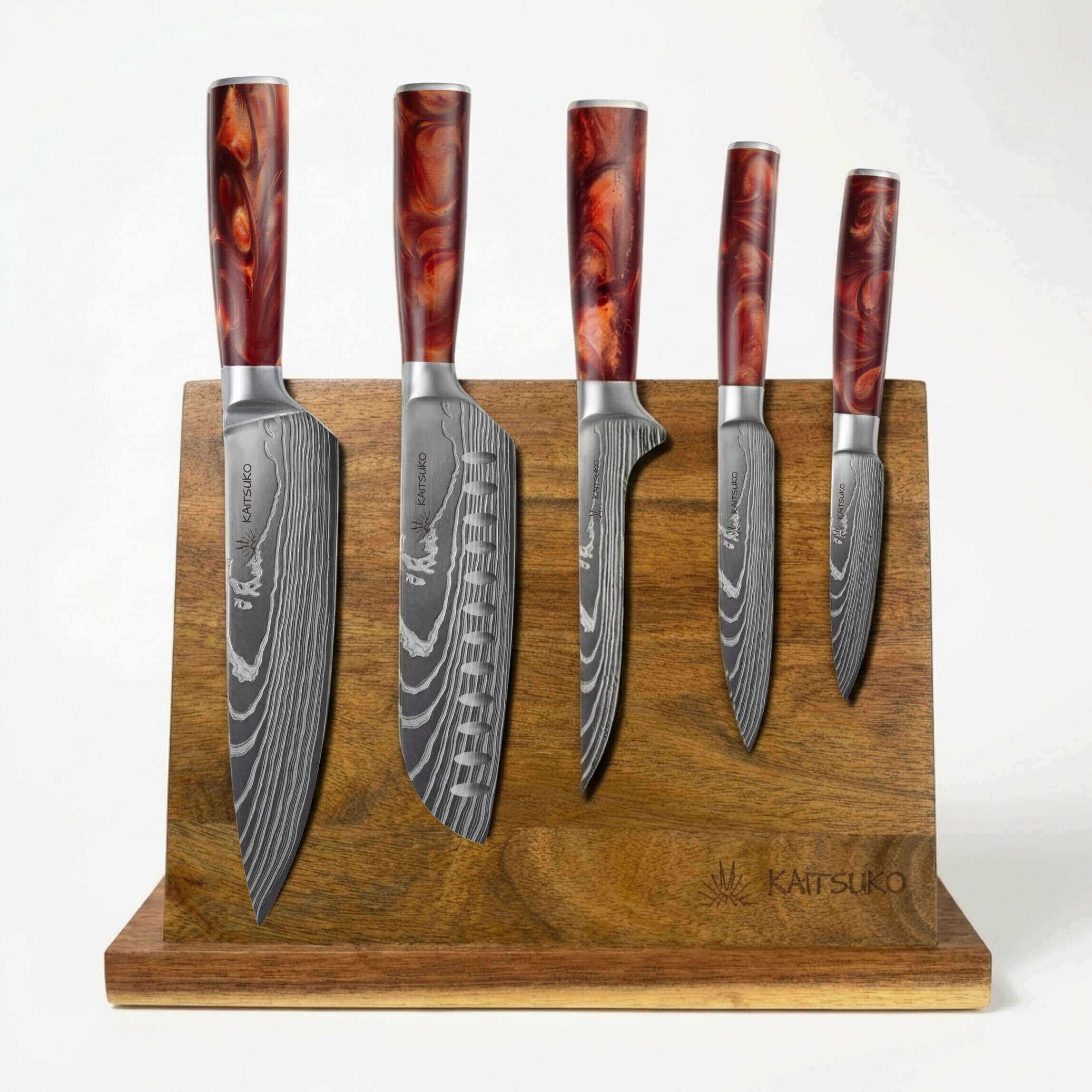
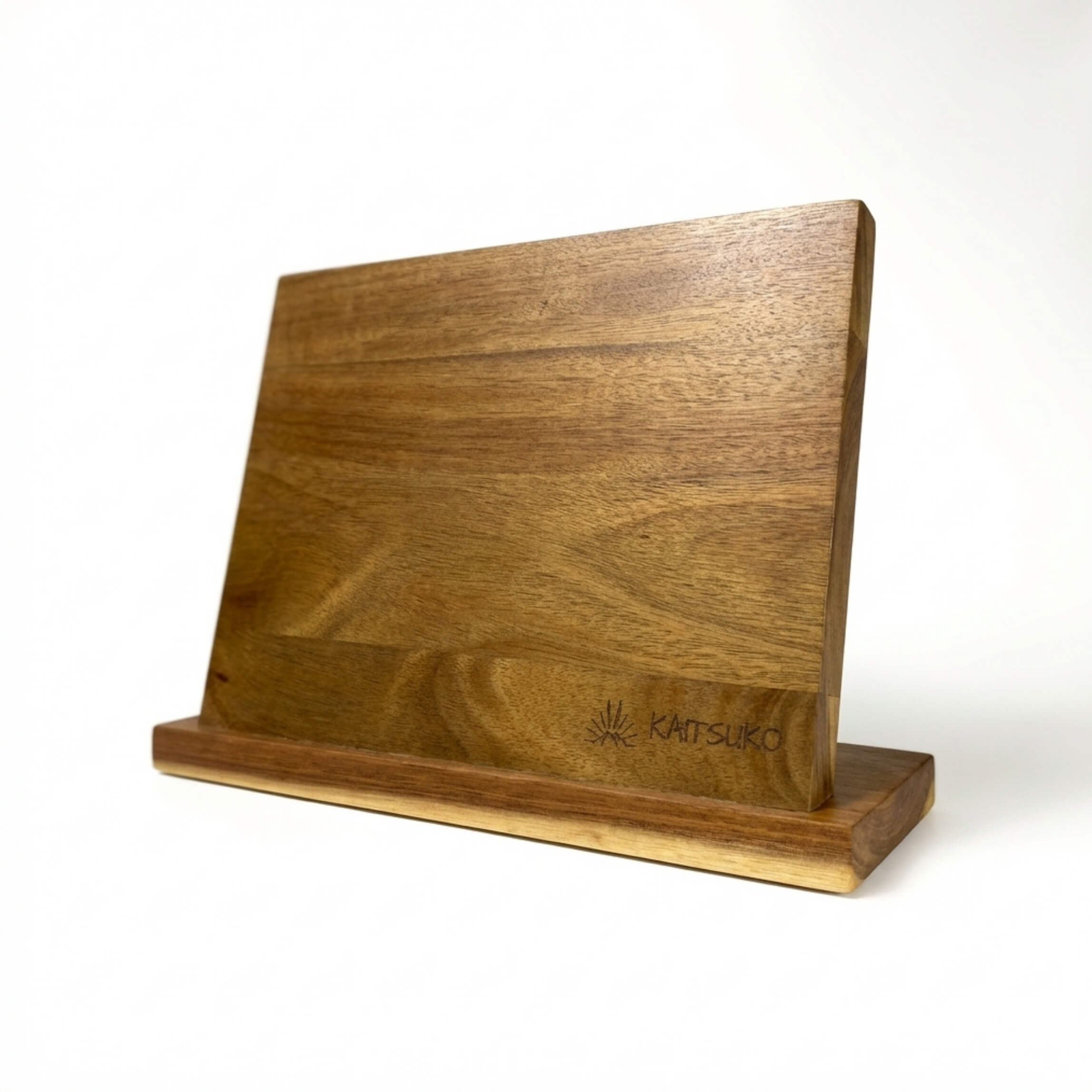
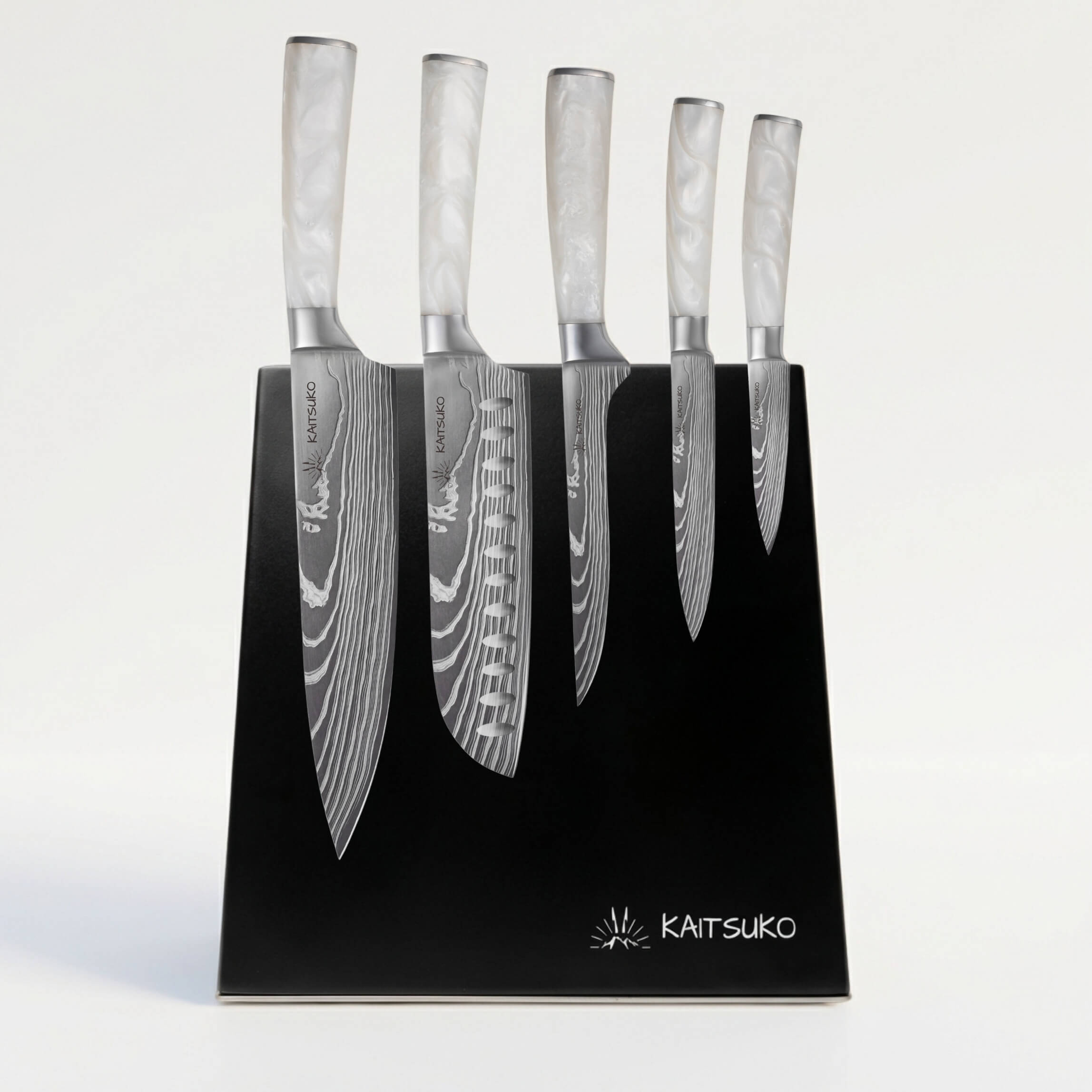
Double-Sided Wooden Knife Block


Japanese Knife Accessories: Preserving the Technical Precision of Your Gesture
Acquiring a precision knife in 10CR15CoMoV or 5CR15MoV steel is only the first step in the quest for absolute sharpness. To maintain a cutting geometry at 15° and protect a 60 HRC blade, the use of specialized accessories is imperative. At Kaitsuko, we consider accessories not an optional complement, but an indispensable technical extension to guarantee the longevity of your tools.
1. Whetstones, Honing Steels and Precision Sharpening
Sharpening is the structural maintenance of the blade. While disc sharpeners offer a quick and practical daily solution, the water stone remains the method favored by purists to best preserve the steel structure over the long term.
- Technical note: A double-sided stone (1000/8000 grit) handles both edge deburring and mirror polishing.
- Knowledge: The 1000 grit restores the blade edge, while the 8000 grit closes the steel pores for a perfect glide. For a constant angle of 15°, the use of a sharpening guide is recommended for beginners.
- Performance analysis: On 10CR15CoMoV steel, stone sharpening restores a lasting razor edge, where a standard honing steel would only realign an already dulled edge.
- Expert verdict: We recommend the whetstone for all our Damascus and Hammered collections. The ceramic honing steel is to be reserved exclusively for the daily maintenance of softer steels such as 5CR15MoV (Tanaka range).
2. Storage and Protection: Safety for the Edge and the User
Loose storage is the number one enemy of Japanese cutlery. Contact between two high-hardness blades inevitably causes chipping.
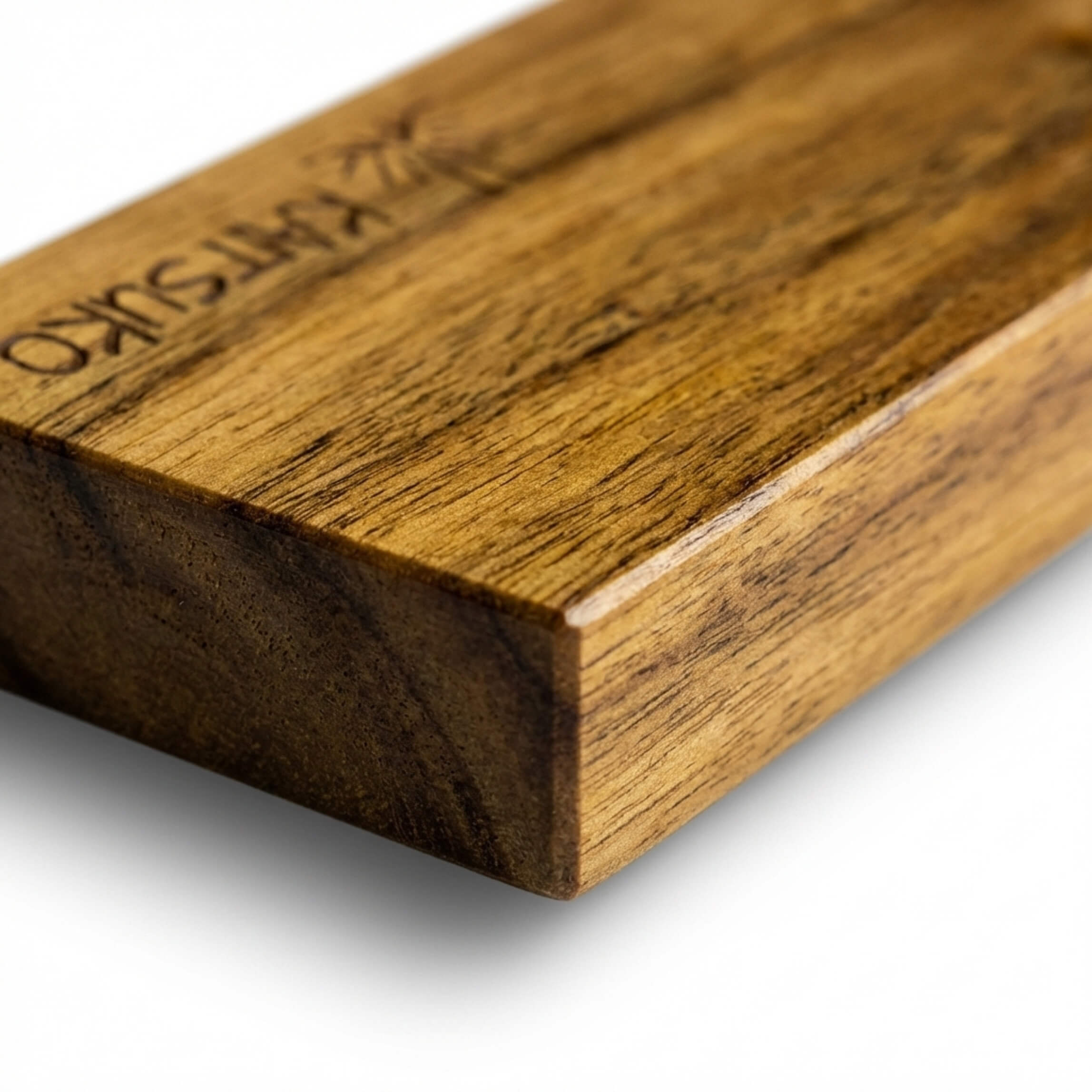
- Technical note: Magnetic holders in acacia wood, teak and medium-density fiberboard use powerful magnets to hold the blade without scratching the 67 layers of Damascus steel.
- Knowledge: To secure the technical gesture, the use of a stainless steel finger guard is a must for rapid cuts (fine slicing). For transport, each blade must be slipped into a blade guard (saya) before being inserted into an Oxford fabric bag to prevent any internal friction.
- Performance analysis: A wooden knife block allows vertical insertion that protects the edge, while the wall magnetic bar offers optimal hygiene by preventing moisture accumulation.
- Expert verdict: Prioritize wooden holders (acacia, teak) for their natural softness. Avoid bare metal holders that could mark the hammered finishes.
3. Blade Care and Maintenance
A high-carbon steel (1.05% for our 10CR15CoMoV) is sensitive to its environment. Preventive maintenance is the key against corrosion.
- Technical note: Camellia oil is a neutral, non-drying oil traditionally used to protect blades from oxidation.
- Knowledge: In the case of light oxidation stains, a rust eraser (soft abrasive rubber) allows the blade to be cleaned without altering the Damascus patterns.
- Performance analysis: Applying polishing wax to the wooden handle (pakka or resin) prevents drying and preserves the ergonomics of the grip.
- Expert verdict: Never let your knives air dry. Immediate wiping with a clean cloth after each use is the golden rule.
4. Complementary Kitchen Tools
To complete your arsenal, certain tools can complement your Kaitsuko knives:
- Cutting board: Use exclusively wood (teak or acacia) or robust plastic. Glass or marble boards instantly destroy the 15° edge of your blades.
- Japanese scissors: Designed for herbs or small cuts, they offer surgical precision.
- Fish bone tweezers: Essential for preparing your fish before using your sashimi knife.
- Kiridashi knife: A small precision scoring and cutting tool, ideal for delicate work in the kitchen or crafts.
5. Profile Guide: Matching the Accessory to the Knife
Each type of Japanese knife has its own geometry that dictates the choice of storage and maintenance.
- The versatile knives: The Santoku knife, the Gyuto knife (or chef's knife) and the utility knife form the core of a collection. They require whetstones with a large surface to stabilize the bevel.
- Precision: The utility knife and the paring knife (Petty) are short blades intended for precision work. For these tools, more compact stones or ceramic honing steels allow quick edge maintenance.
- Artisanal excellence: Our handcrafted knives and the Prestige knife range (10CR15CoMoV steel at 60 HRC) require strict protective storage, such as a noble wood block or a magnetic bar, to avoid any contact with other metals.
- The art of entertaining: Japanese table knives bring the cutting performance of the kitchen directly to your guests.
- Global solutions: For those seeking complete technical consistency, our knife sets group the essential profiles, often accompanied by their dedicated storage solutions.
6. Advantages and Benefits: why equip yourself at Kaitsuko?
Investing in quality accessories is not a luxury, but a strategy to optimize your work in the kitchen.
- Comfort of use and ergonomics: Our accessories are balanced to reduce fatigue. A well-designed knife handle limits joint stress during prolonged service.
- Time saving and energy efficiency: A perfectly maintained blade with our whetstones requires less physical force. The penetration is fluid, which accelerates the preparation pace.
- Bacteria resistance and hygiene: We favor dense materials (acacia, teak wood) that limit porosity and promote optimal bacteria resistance.
- Usage flexibility and versatility: Our cases and holders allow you to transport or organize your equipment according to your needs, whether in a domestic or professional kitchen.
- Expert reminder: The durability of a Kaitsuko knife is proportional to the quality of its accessories. A well-maintained set retains its mechanical properties for decades, returning value on every euro invested through consistent performance.
FAQ
What accessories are essential for maintaining a Japanese knife?
The indispensable trio consists of a whetstone (1000/3000 grit), a storage holder (magnetic or block) and a protective oil for high-carbon steels.
How to choose the right whetstone?
It all depends on the condition of your blade. For regular maintenance, a double-sided 1000/3000 stone is ideal. If your blade is chipped, a coarser grit (400) will be needed to reshape the bevel before moving on to polishing.
What are the best accessory brands?
Beyond our Kaitsuko selection, brands such as Kai, Yaxell, Wusaki or Chroma France offer high-quality accessories. We recommend choosing accessories whose materials (walnut wood, ebony, ceramic) match the quality of your blades.
How to extend the life of a Japanese knife?
- Hand washing only: The dishwasher destroys the steel's temper and the handle.
- Protected storage: Use blade guards or a magnetic bar.
- Appropriate cutting surface: Ban hard surfaces (glass, ceramic).
- Regular sharpening: Don't wait until the knife stops cutting to use your stone.
What is the average price for accessories?
A quality whetstone costs between €50 and €70. A noble wood magnetic holder sits between €50 and €80. It is a minor investment compared to the cost of a premium knife set, but it guarantees that your tools will remain high-performing for decades.