



Magnetic Wall Knife Holder – 40 cm
Magnetic Wall Knife Holder – 40 cm
Description and technical specifications
Magnetic Wall Knife Holder
The Essentials in 2 Points
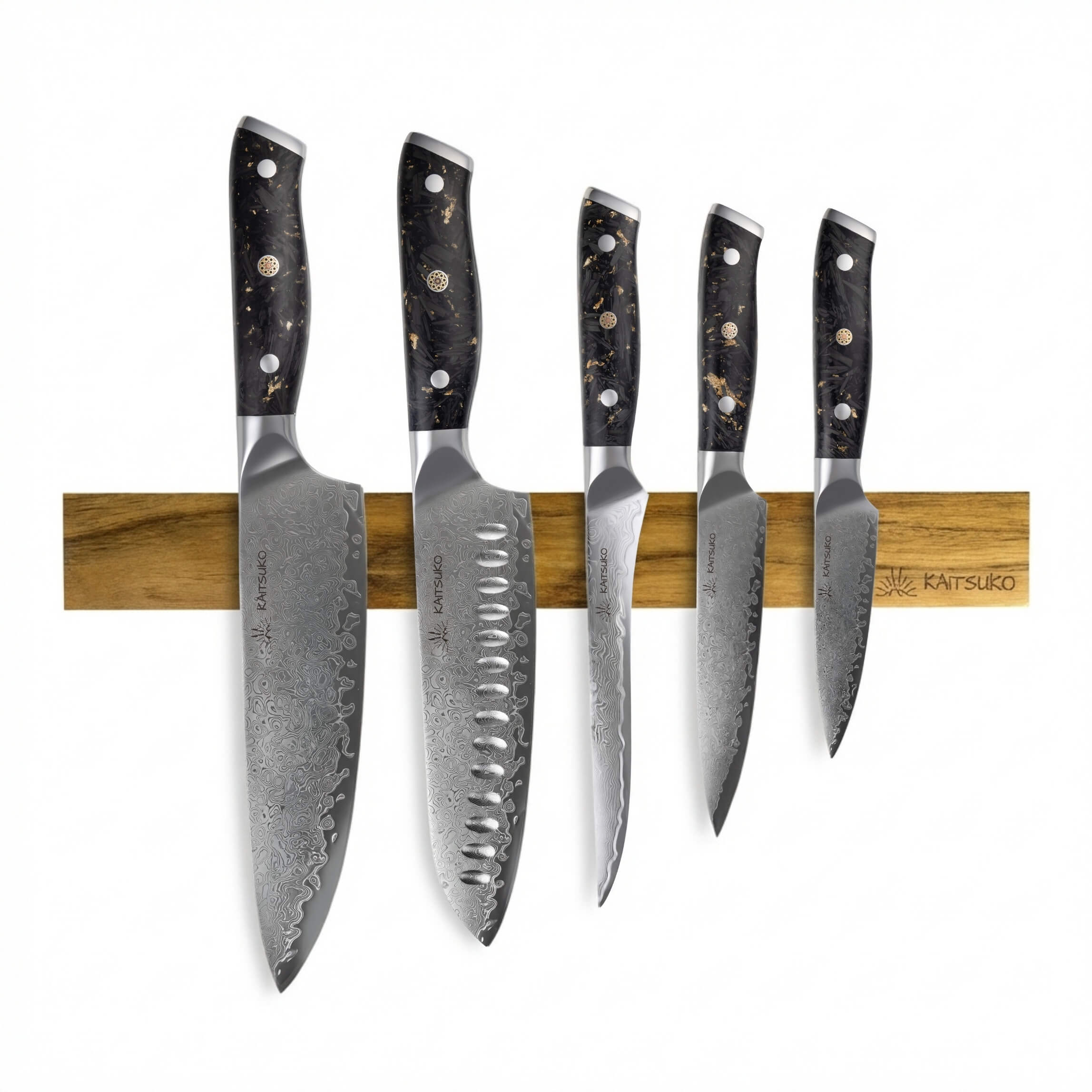
- Edge Protection: Unlike drawers, the magnetic holder prevents micro-scratches and preserves the sharpness of hard steel blades (60+ HRC).
- Superior Magnetic Strength: Fitted with N35 neodymium magnets capable of supporting over 11.3 kg for total stability of your Japanese knives.
Why Choose a Magnetic Knife Holder for Your Japanese Blades?
For a Japanese knife, storage is not just a matter of organisation — it's a technical preservation measure. Kaitsuko blades, whether in martensitic 5CR15MoV steel or Damascus 10CR15CoMoV steel, feature extremely fine 15° symmetrical bevels. Wall storage is a technical measure to prevent dulling caused by friction.
The End of Micro-Scratches
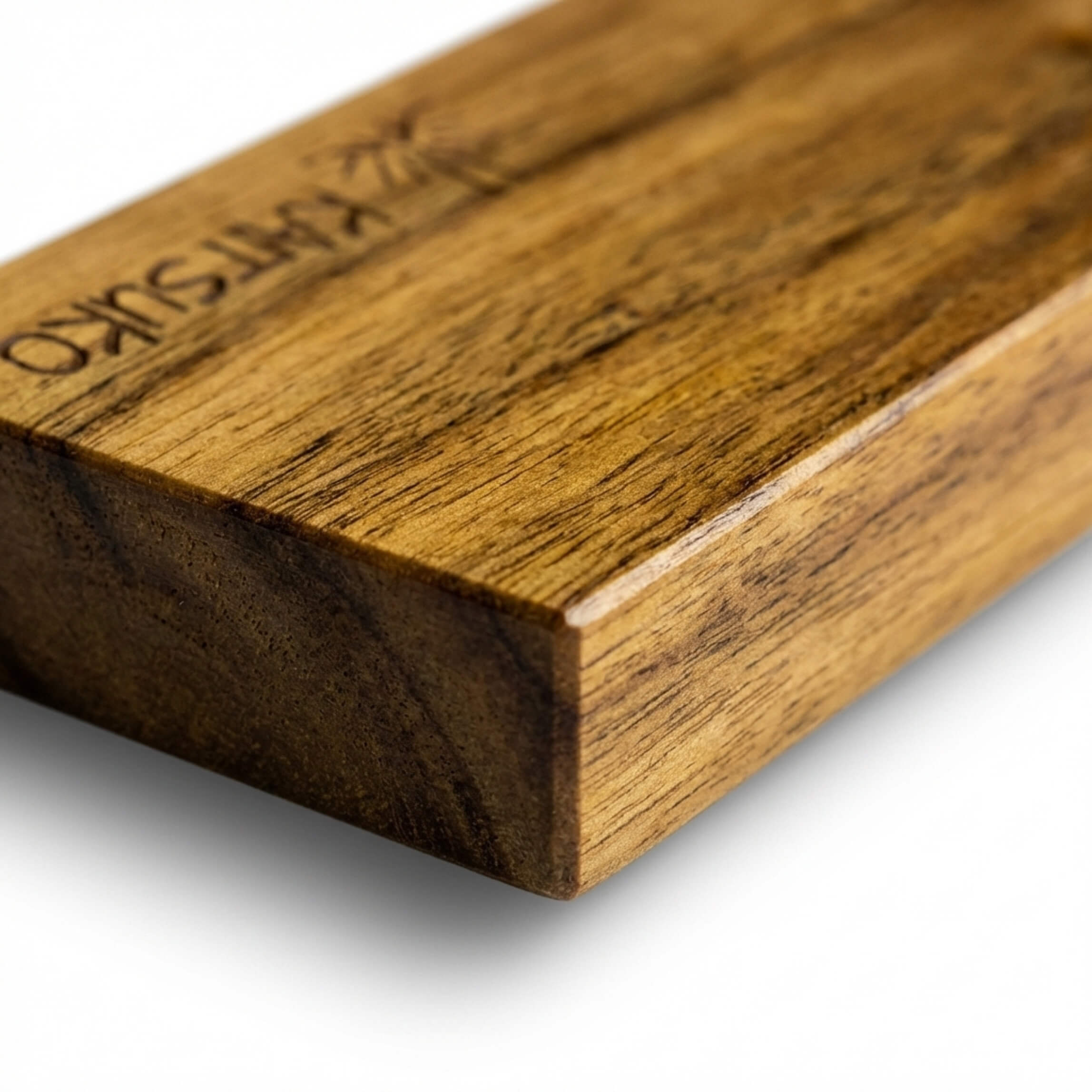
Storing your knives in a drawer or traditional knife block exposes the edge to repeated mechanical friction. The magnetic wall holder offers a non-abrasive teak wood surface. These wood types, selected for their density and natural moisture resistance, guarantee gentle contact that preserves the integrity of the wire edge (the blade's edge), unlike stainless steel holders which can cause micro-impacts.
Accessibility and Hygiene
By freeing up your worktop, you gain greater freedom of movement. The magnetic rail is antibacterial and antifungal as it has no internal slots where moisture and food residues can accumulate.
Technical Specifications: The Power of Neodymium
Our holders integrate neodymium magnets, the most advanced technology in permanent magnetism.
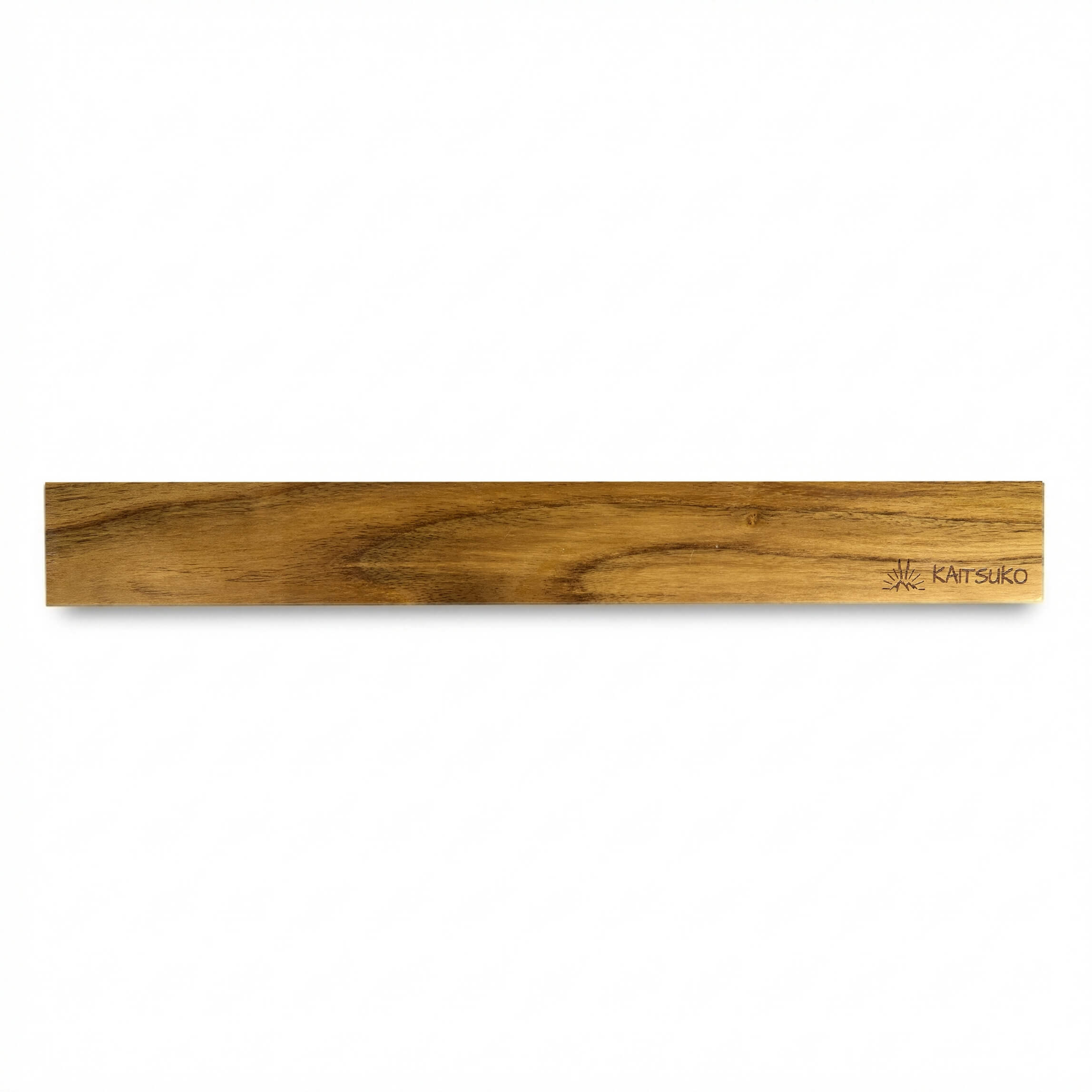
Premium Materials: Teak wood frame. The teak, selected for its density, guarantees gentle contact that preserves the integrity of the wire edge, unlike brushed metal frame holders which can cause micro-impacts upon removal. Teak wood is recommended by Kaitsuko for delicate Japanese blades to provide a softer contact.
Adapted Dimensions: Available length of 40 cm, allowing storage of 3 to 10 knives depending on your needs.
Full Compatibility: Tested with the biggest brands. Whether you own a Santoku, a Nakiri or a Yanagiba, the magnetic force ensures vertical hold without slipping.
Installation Guide: Mounting With or Without Drilling
1. Wall installation without drilling (Ultra-strong adhesive)
Ideal for tiles, glass or polished metal.
- Thoroughly clean the surface to ensure it is free of grease or dust.
- Apply an ultra-strong adhesive.
- Press firmly and evenly for 30 seconds.
Important: Allow the adhesive to dry for 24 hours before hanging your knives.
2. Screw mounting
For textured surfaces such as stucco, stone or wood, we provide the necessary wall plugs and screws. This mechanical mounting is recommended for heavy pieces such as a cleaver or heavy chef's knife, ensuring unwavering structural stability on textured walls (stone, stucco).
Safety and Maintenance
Kitchen Safety
Your magnetic bar should be placed at height, out of reach of children, while remaining at an ergonomic height for the cook. The strength of the neodymium magnets guarantees that a knife cannot accidentally detach.
Regular Maintenance
- Cleaning: Use a damp cloth with a little hot water and neutral soap. Dry immediately.
- Wood protection: For teak wood models, apply a drop of mineral oil every six months to nourish the wood fibre and maintain the wood's lustre.
- Precaution: Always wipe your knives with a soft cloth after washing before placing them on the magnet to prevent long-term corrosion.
The Kaitsuko Expert Verdict
"The magnetic holder is the only storage solution that respects the integrity of a Japanese edge. By avoiding the repeated impacts of drawers, you extend the intervals between your whetstone sharpening sessions. The magnetic holder is the natural bridge to your maintenance accessories. Our expertise is validated by numerous orders shipped and our status as a partner of the Best Brigade in France 2026."
Storage Solutions Comparison
| Criterion | Magnetic Rail | Traditional Block | Drawer |
|---|---|---|---|
| Edge protection | Excellent | Good | Poor |
| Hygiene | Optimal | Regular maintenance required | Average |
| Space saving | Maximum | Compact | Average |
| Visibility | Immediate | Immediate | None |
Our History
Kaitsuko knives are specially selected by our team of enthusiasts. They are designed to offer optimal comfort of use to those who use them. The blades are of impeccable quality .
The strength and durability of our knives will allow you to use them again and again!
They maintain an exceptional sharpness despite daily use.
Kaitsuko knives allow for clean and precise cutting of all your foods. Proper maintenance of your knives will extend their lifespan. This involves careful washing and good sharpening.
Do you have a question? Check out our FAQ to find the answer! If you have another question, our customer service will be happy to answer you from Monday to Friday at info@kaitsuko.fr
-
CUSTOMER SERVICE
Contact us Monday to Friday from 8am to 6pm at info@kaitsuko.fr
-
FAQ
The answer to all your questions HERE .
LEARN MORE
The use of each knife
Kiritsuke Knife : The Kiritsuke knife is a versatile knife that can be used for cutting a variety of foods. Its angled blade allows for precise cuts for slicing vegetables, meat, and fish.
Chef's Knife : The Chef's knife is a versatile tool that features a long, sharp blade, as well as a fine tip for precise and efficient cuts. It is an ideal knife for slicing, chopping, and chop all types of food.
Slicing Knife : The slicing knife is designed specifically for cutting thin slices of meat, poultry, or fish. Its long, narrow blade allows it to glide easily through food. It allows for precise cuts without tearing the food.
Bread Knife : The bread knife is designed to cut through different types of bread without crushing or tearing them. Its serrated blade allows you to slice cleanly through the crispy crust, without crushing the crumb inside.
Santoku Knife : The Santoku knife is also a versatile knife that is ideal for slicing, chopping and cutting different foods. With a wide, straight blade with a rounded tip, it has a large cutting surface. In short, the This knife is perfect for making multiple preparations in the kitchen.
Nakiri Knife : The Nakiri knife is specialized in cutting vegetables. Its straight, rectangular blade offers a wide cutting surface that is ideal for chopping, slicing and mincing precisely. It can also be used as a shovel knife to transfer vegetables into the flat.
Utility Knife : The utility knife is versatile. It is designed to perform several types of tasks in the kitchen. Its size, halfway between a chef's knife and a utility knife, makes it perfect for medium-sized cutting tasks, such as slicing fruit. , vegetables, cheese, peel, or even cut food into small pieces.
Boning Knife : The boning knife is specially designed to remove meat from bones with precision. Its rigid and narrow blade allows it to follow the contour of the bones, thus reducing meat waste.
Paring knife : The paring knife is ideal for precision tasks thanks to its small size and short, pointed blade. It is perfect for peeling and cutting fruits and vegetables, as well as for making delicate cuts. Versatile and handy, the paring knife is often used for detailed work that requires great precision. Whether it's for removing seeds from a fruit, coring tomatoes or chopping herbs, this knife is an essential companion for amateur and professional chefs.
Steak Knife : Steak knives, also called "table knives," are knives designed specifically for cutting cuts of meat during meals. They have a serrated blade that makes it easy to slice through pieces of meat without tearing the fibers.
Nordic Knife : Nordic knives are also known as Scandinavian knives. They are sturdy and versatile and can handle a wide range of kitchen tasks. They can also be used for cutting wood or preparing food during cooking sessions. hunting or camping.
Knife maintenance
- Never put knives in a dishwasher.
- Wash knives by hand and wipe the blade thoroughly with a soft, dry cloth to maintain the efficiency and quality of the blade.
- Clean the blades with soapy water.
- If the knives have wooden handles, dry them thoroughly before storing.
- Knives do not stay sharp for life, no matter the blade; it is therefore advisable to sharpen them as soon as the edge becomes less sharp.
- Do not use the edge of the knife to push food onto the board. Use the back of the blade instead.
- Never use the abrasive side of sponges to clean blades.
- Cut food on a wooden board to avoid damaging the blade of your knives.
- Do not make any cuts in a pan or baking dish to avoid damaging the blade of the knives.