

Set of 2 Japanese knives - Yellow Sea Series


Set of 3 Japanese knives - Kyoto


Set of 5 Japanese knives - Chef Yakumoto

Set of 7 Japanese knives - Yellow Sea Series



Set of 3 Japanese knives - Chef Yakumoto

Chef's knife - Yellow Sea series


Set of 7 Japanese knives - Kyoto

Set of 3 Japanese knives - Yellow Sea Series

Santoku Knife - Yellow Sea Series
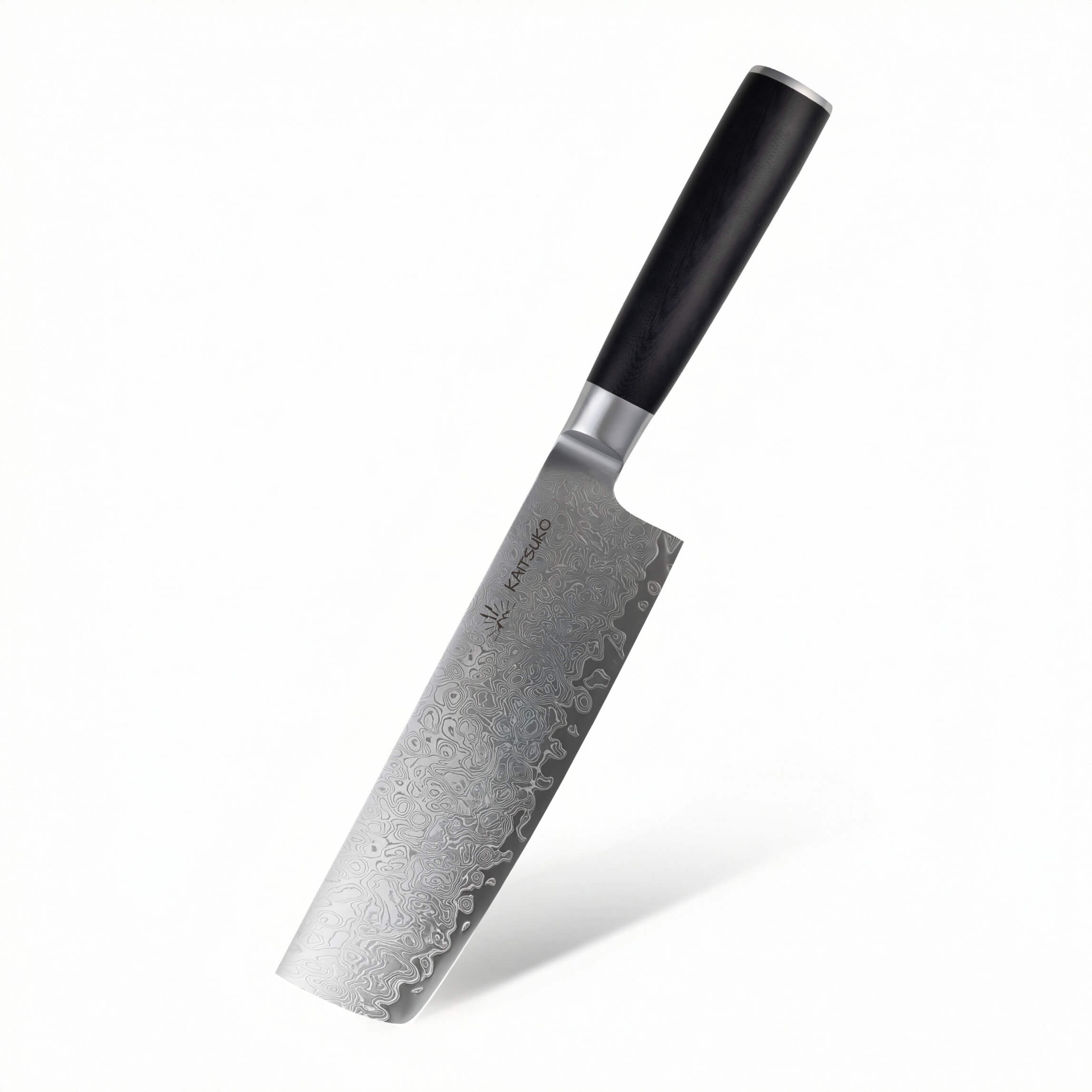
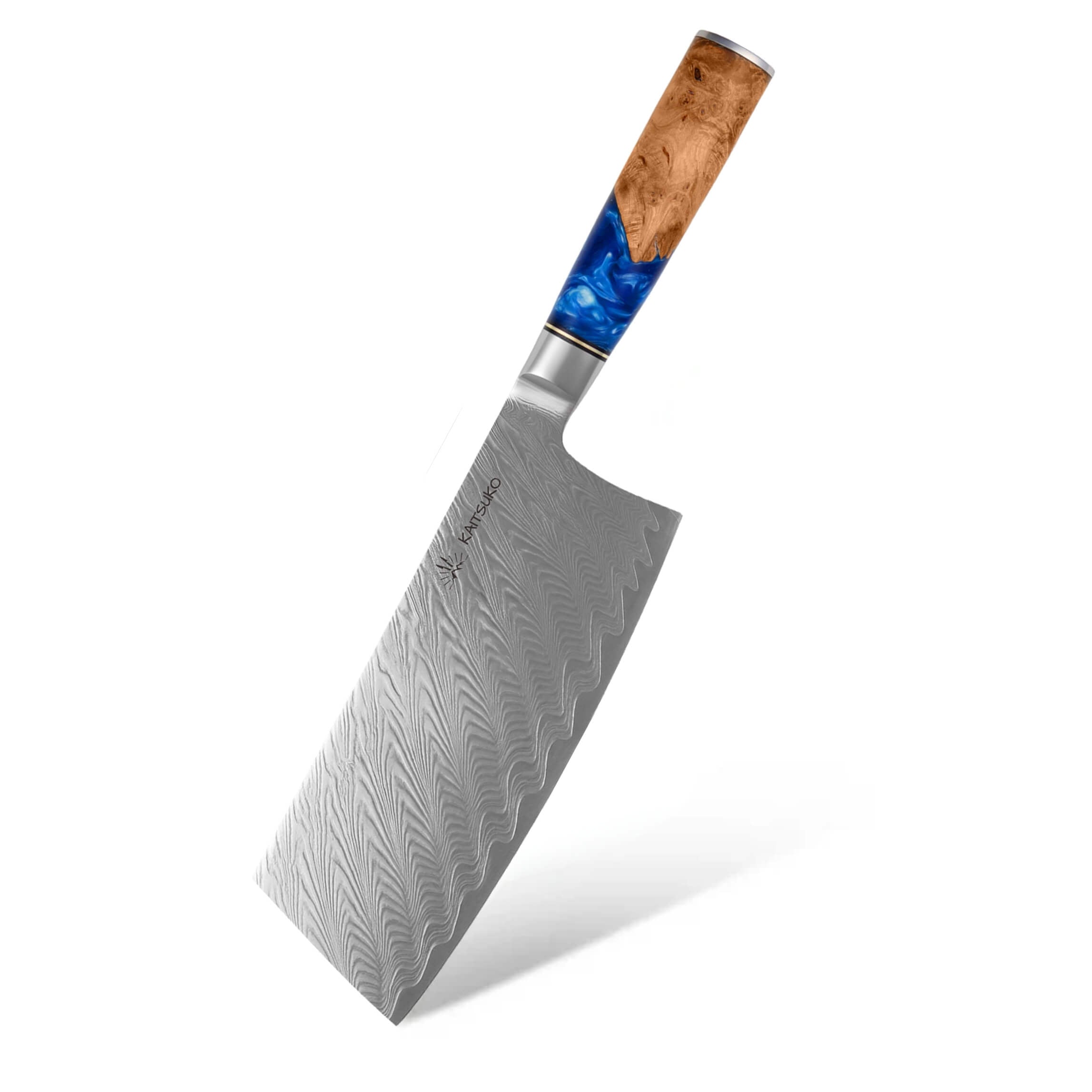
Nakiri knife / cleaver - Kyoto

Set of 5 Japanese knives - Kyoto


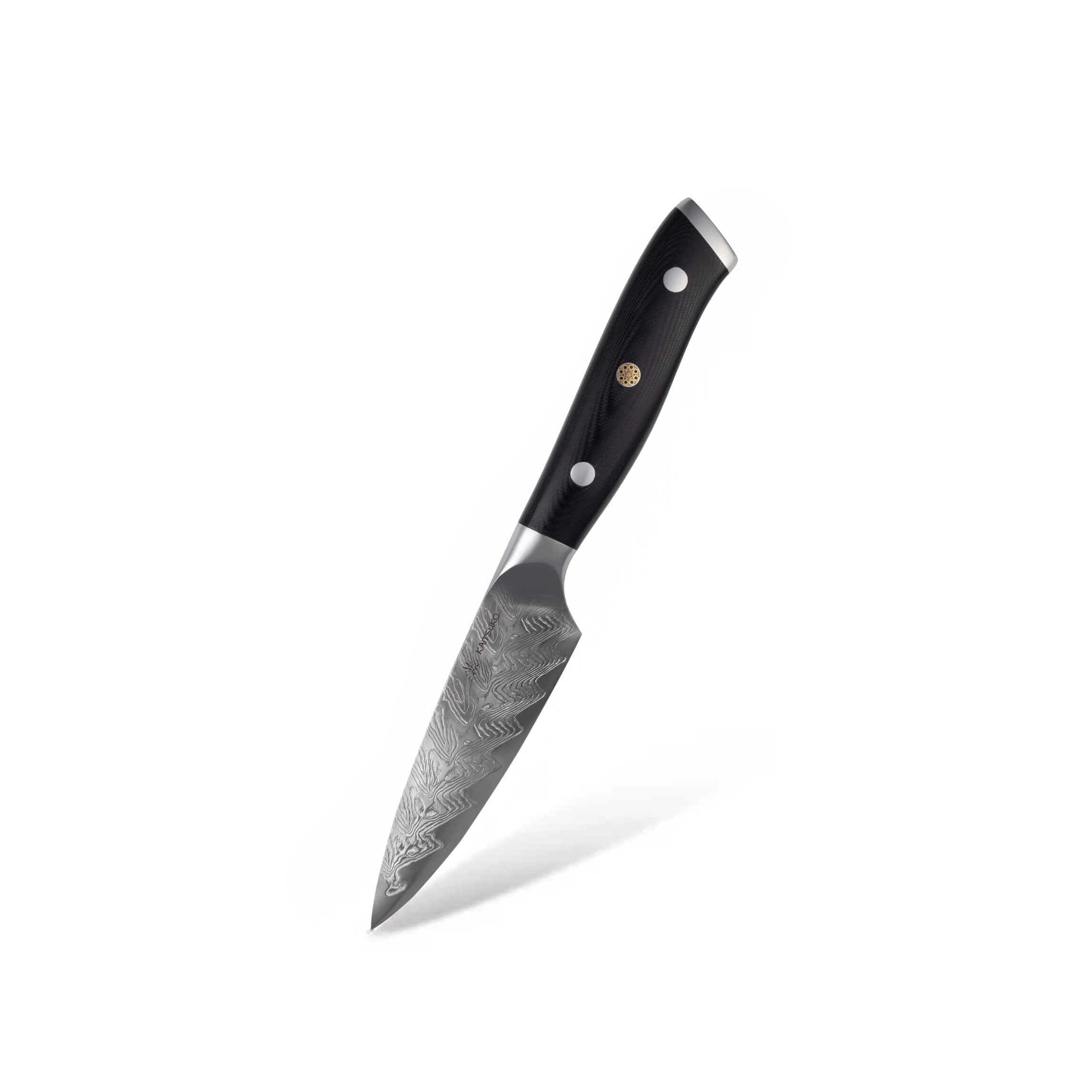


10CR15CoMoV Steel and San Mai Technique - 58-60 HRC Hardness - Durably Razor-Sharp Edge.
At Kaitsuko, a Japanese Damascus knife is not a simple aesthetic promise. It is a precision tool designed for the gesture. Our blades are obtained by forging 67 layers of martensitic steel, hot-welded and hammered to reach a hardness of 58-60 HRC. This multi-layer structure guarantees exceptional edge retention and optimal corrosion resistance.
Prestige, Kyoto, Yellow Sea Series, Yakumoto collections: each range meets a precise technical need of the modern cook.
What is a Damascus Knife?
Damascus Knife: unique origins and manufacturing processes.
The Origin of the Name and the Damascus Blade
Damascus knives take their name from Damascus steel, an iconic and popular material in the world of kitchen cutlery. They also refer to an original manufacturing process, using several layers of steel folded and welded together: hard steel for the edge, softer steel for flexibility.
The Damascus blade stands out for its robustness, durability and flexibility. It is solid and offers an unmatched edge.
Why is its appearance so unique?
Beyond its exceptional performance, the Damascus blade distinguishes itself through its forging methods, which shape unique patterns: waves, scrolls, undulating shapes... These artistic elements combine tradition and innovation, producing blades comparable to works of art, as creative as they are technical.
The Advantages of a Damascus Knife in the Kitchen
Damascus knives are widely used in cooking, especially in traditional Japanese cuisine. They are appreciated both for their performance and their design.
A Lasting Edge and a Robust Blade
The manufacturing process of Damascus blades produces robust knives, resistant to breakage, and recognized for maintaining their exceptional edge use after use.
The blade structure absorbs impacts, preventing any cracking, as well as offering corrosion and rust resistance.
The Damascus knife is the perfect balance between performance and aesthetics: an art object synonymous with excellence.
For Which Uses is it Most Suitable?
Damascus knives can be used for both everyday and professional use. They offer a clean and precise cut without effort or the need for any particular technique. All the flavors and textures of food are preserved.
Versatile, the Damascus knife allows you to slice meat, vegetables or fish with ease and fluidity. It is a knife with a premium blade, prized for all uses, and elevating every kitchen gesture.
Layer Forging, Explained Straightforwardly
Damascus steel is obtained by pattern welding: several different steels are stacked, heated, hammered and hot-pressure welded. This cycle is repeated until the desired number of layers is achieved. At Kaitsuko, this standard is set at 67 layers: a technically calculated balance between edge hardness, blade flexibility and the fineness of surface patterns.
Why is every blade unique?
The patterns visible on the blade — waves, scrolls or geometric figures — are not applied afterwards. They result directly from the differences in carbon content between the steel layers, revealed during polishing. Since every forging is unique, no two blades ever display exactly the same pattern.
The Excellence of 10CR15CoMoV Steel (San Mai)
Our Damascus blades use 10CR15CoMoV steel. This choice is deliberate: with 1.05% carbon, this steel offers exceptional hardness of 58-60 HRC, guaranteeing an edge that lasts twice as long as standard steel. We use the traditional Japanese San Mai technique ("three layers"): the hard 10CR15CoMoV steel core is forged in a "sandwich" between softer steel layers. This assembly combines razor-sharp cutting precision with a robust and resistant blade.
How Many Layers for a High-Performing Damascus Knife?
The question of layer count comes up often. Here is the technical reality: below 32 layers, the mechanical performance of a multi-layer blade does not exceed that of a classic single-piece steel. Beyond 300 layers, the layers become so thin that the distinction between steels blurs, reducing the Damascus effect. 67 layers represent the optimal compromise for kitchen use: clean patterns, homogeneous edge and measurable edge retention.
10CR15CoMoV Steel · 67 layers · HRC 58-60
- San Mai technique: hard 10CR15CoMoV core (high carbon content) framed by more flexible steel layers.
- Performance: Fine edge at 15°, homogeneous hardness across the entire blade, high edge retention, long-term corrosion and wear resistance.
- Result: Precise and lasting cut with excellent shock tolerance.
- Structure: Alternating steel layers of different hardnesses with dense hammering for deep patterns.
- Collections: Chef Yakumoto, Prestige (Spectre), Kyoto and Yellow Sea Series.
The Expert Verdict:
A 60 HRC steel resists dulling approximately twice as long as a 54 HRC steel. The difference is concrete after a few weeks of daily use: your knife requires less sharpening and its edge remains operational much longer.
The Kaitsuko Damascus Collections
Kyoto Collection
- Use: Complete range to equip a kitchen (Chef, Santoku, Nakiri...).
- Steel: San Mai 10CR15CoMoV / 58-60 HRC.
- Handle: Black G10 (fiberglass and resin), moisture-insensitive.
- Expert verdict: For the demanding chef seeking a consistent and unalterable knife set.
Prestige Collection (Spectre Series)
- Use: Unique Kiritsuke knives sold individually.
- Steel: San Mai 10CR15CoMoV / Razor edge.
- Handle: Stabilized wood and handcrafted epoxy resin.
- Expert verdict: The ultimate alliance between technical performance and aesthetics for collectors.
Yellow Sea Series
- Use: Ultra-precise cuts (sashimi, julienne).
- Steel: San Mai 10CR15CoMoV / Deep Damascus pattern.
- Handle: Blue epoxy resin and stabilized wood.
- Expert verdict: For cutlery enthusiasts seeking a premium high-performance steel.
Yakumoto
- Use: Ultra-precise cuts (sashimi, julienne) and demanding finishing work.
- Steel: San Mai 10CR15CoMoV / 67 Damascus layers.
- Hardness: 58-60 HRC for exceptional edge retention.
- Handle: Three ergonomic finishes to choose from: G10 Onyx (high resistance), Carbon Gold (composite and gold leaf) or White Stone (magnesium carbonate).
- Expert verdict: A choice of excellence for the cook who demands a premium high-carbon steel (1.05%) combined with a modern and unrottable handle design.
What a Damascus Knife Genuinely Does Better and How to Verify It
The Real Advantage of Damascus Steel over Standard Stainless
A Damascus knife does not cut food differently from a good stainless knife on the first pass — the difference is measured over time. The HRC 60-62 hardness allows the blade to maintain a 15° bevel operational much longer than a 54-56 HRC steel. In concrete terms: less sharpening, a precise cut that does not degrade food fibers, and an edge that remains reliable after weeks of daily use.
The multi-layer blade also absorbs micro-vibrations during cutting better. This is not a marketing benefit — it is a direct consequence of the alternating steel layers of different hardnesses, which distributes mechanical stress rather than concentrating it at a point of weakness.
How to Recognize a Genuine Damascus Knife — Without Being Fooled
- Forged patterns visible across the entire Damascus blade surface — not a laser-engraved surface pattern or chemically printed design.
- Number of steel layers explicitly stated on the product page: 67 layers at Kaitsuko.
- HRC hardness specified: 60 minimum for quality Japanese Damascus kitchen steel.
- Steel type named: 10CR15CoMoV, San Mai 10CR15CoMoV — not just "Damascus steel".
- Purchase on kaitsuko.fr only: French VAT invoice, official packaging, reachable customer service.
A simple test: run your fingernail perpendicular to the blade edge. A 60 HRC edge should lightly catch the nail without sliding. If it slides, the edge is dull or the steel is too soft.
Caring for a Damascus Blade: the Technical Gestures That Count
Daily Care Protocol
✓ Clean with soapy water immediately after use — the acidity of food (lemon, tomato, vinegar) attacks the blade if it dries on it.
✓ Immediate drying with an absorbent cloth — even a stainless Damascus steel can develop surface oxidation stains if moisture stagnates.
✓ Use on wood board only — glass and ceramic irreversibly chip the 15° bevel.
✓ Store in a knife block or on a magnetic holder — blade-to-blade contact causes micro-chips on the bevel.
Sharpening a Damascus Blade at 15°: Why the Angle Matters
A Kaitsuko Damascus knife is beveled at 15° by construction. Sharpening at 20° (European knife angle) progressively degrades the blade geometry and reduces its performance. The 15° angle requires a little practice but is learned quickly with a whetstone laid flat.
Double-sided whetstone 400-1000 — Complete sharpening
- 400 grit: restores a dulled bevel in 8-10 passes per side
- 1000 grit: refines the edge in 5-6 passes
- Constant angle at 15°
- Evaluate the edge on a fingernail between each series
Whetstone with handle — Guided sharpening
- Diamond stone with integrated angle guide
- Stabilizes the grip · reduces angle errors
- Recommended for beginners on Damascus HRC 60+ blades
Professional honing steel — Maintenance between sharpenings
- 3-5 passes before each service to realign the edge without removing material
- Does not replace the whetstone
- Also use at 15°
FAQ
What is 10CR15CoMoV steel?
It is a premium high-carbon steel (1.05%) enriched with Cobalt, Molybdenum and Vanadium. This composition, comparable to the finest Japanese steels, enables a hardness of 58-60 HRC. It offers edge retention twice that of standard steels, reducing sharpening frequency.
How to recognize a genuine Kaitsuko Damascus knife?
An authentic Damascus displays patterns resulting from steel folding, visible across the entire blade. At Kaitsuko, we always specify the HRC index (approximately 60) and the steel type used (10CR15CoMoV). Note: our logos are clean laser engravings, not stamps.
Are your knives made in Japan?
In the spirit of quality transparency, we specify that our knives are manufactured by rigorous partners in Asia. We select the finest steels and control every stage of manufacturing to deliver the precision of Japanese craftsmanship without excessive intermediate costs.
Find the Damascus Knife Suited to Your Gesture
Explore all our Japanese knives