


Kiritsuke Knife - Spectre II
Also discover
Kiritsuke Knife - Spectre II
Description and technical specifications
Japanese Kiritsuke Knife, Spectre II
The 2nd variation of the Kaitsuko Prestige Collection
The Spectre II is the second piece in our Spectre series, a collection of 7 premium Kiritsuke knives where each variant is defined by a unique handle. Its two-tone handle, light stabilized wood on the blade side and white epoxy resin on the pommel side, makes it the brightest and most refined variation in the series. A clean visual signature designed for cooks who want a precision tool without sacrificing elegance on the countertop.
Beneath this aesthetic lie the technical standards of the Prestige collection: 10CR15CoMoV steel, 58–60 HRC hardness, 67-layer Damascus blade.
The Spectre II Identity: A Signature Two-Tone Handle
The Light Wood / White Resin Contrast
Where the Spectre I plays with vibrant shades of deep red and brown, and other variants explore bolder palettes, the Spectre II embraces a bright, luminous identity. The stabilized wood retains its natural visible grain on the blade side, while the white epoxy resin extends the handle to the pommel in a clean, sharp transition — no gradient, no fade. The result: a knife that visually contrasts with the Damascus blade and catches the light beautifully in open-plan kitchens.
A Handle Designed for Long Service
The stabilized wood and epoxy resin pairing is more than aesthetic. The stabilized wood is deeply impregnated to resist moisture and temperature changes, while the epoxy resin reinforces the handle's structure. You get a stable, slightly textured grip that won't slip even with wet hands — and won't warp over time the way a raw wood handle might.
Between the Usuba and Yanagiba: What Is a Kiritsuke?
The Versatility of a K-Tip Blade
The Kiritsuke's defining feature is its straight angular tip, known as the K-Tip. This geometry enables extreme precision work — ideal for sliding under delicate tissues or executing ornamental cuts. Unlike a classic chef's knife with a rounded profile, the Kiritsuke has a straighter edge line that favors a clean, direct top-down cutting motion.
Why the Kiritsuke Is the Symbol of Chef Status
In professional kitchens, carrying a Kiritsuke is often considered a privilege earned through experience. Its hybrid profile requires a degree of technical skill to fully leverage the blade length. Choosing the Spectre II is a statement of precision and a deep understanding of different cutting styles — with the added identity of a numbered piece within a series of 7.
Blade Anatomy: Shared Across the Entire Spectre Series
The Molecular Structure: 58–60 HRC Hardness
The core of the Spectre II blade is forged from 10CR15CoMoV steel, a premium alloy enriched with carbon (1.05%) and cobalt. This technical choice delivers a hardness of 58–60 HRC, offering significantly superior edge retention compared to standard steels. The cobalt content enhances wear resistance, allowing you to space out sharpening sessions while maintaining a consistently razor-sharp edge.
67-Layer Damascus: A Unique Pattern on Every Spectre II
The 67 steel layers surrounding the core protect it while providing structural flexibility to the blade. The rigorous folding process means the Damascus wave pattern is unique on every piece — including from one Spectre II to the next. Combined with the light two-tone handle, this Damascus pattern stands out with a particularly sharp contrast, where other variants in the series visually soften the blade.
Kitchen Performance: Precision and Ergonomics
Kiritsuke vs Gyuto vs Santoku: Which One to Choose?
While the Santoku is the ultimate all-purpose home knife, the Spectre II sets itself apart with its length and tapered tip. Compared to the Gyuto (chef's knife), it offers a flatter blade profile, ideal for push-cutting. It's the go-to tool for those who prioritize slice fineness over the speed of a rocking motion.
Balance and Symmetrical Bevel
We opted for a double-bevel grind (50/50) at 15° per side. This setup makes the Spectre II accessible to both right- and left-handed cooks, while maintaining exceptional penetration through fibers. At a balanced weight of approximately 175 g, the knife works for you and reduces fatigue during long prep sessions.
Care Guide
The Art of Sharpening: Preserving the 15° Angle
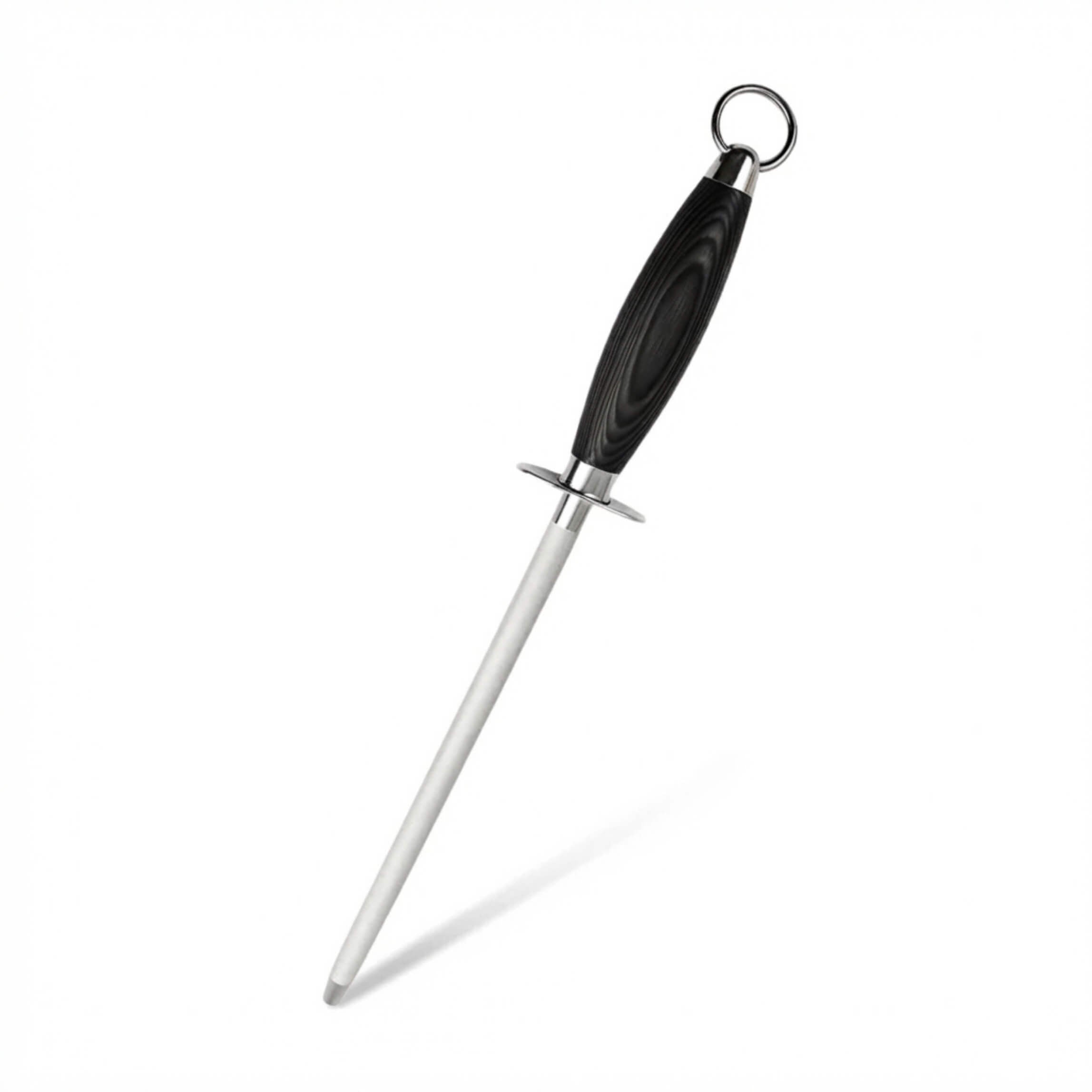
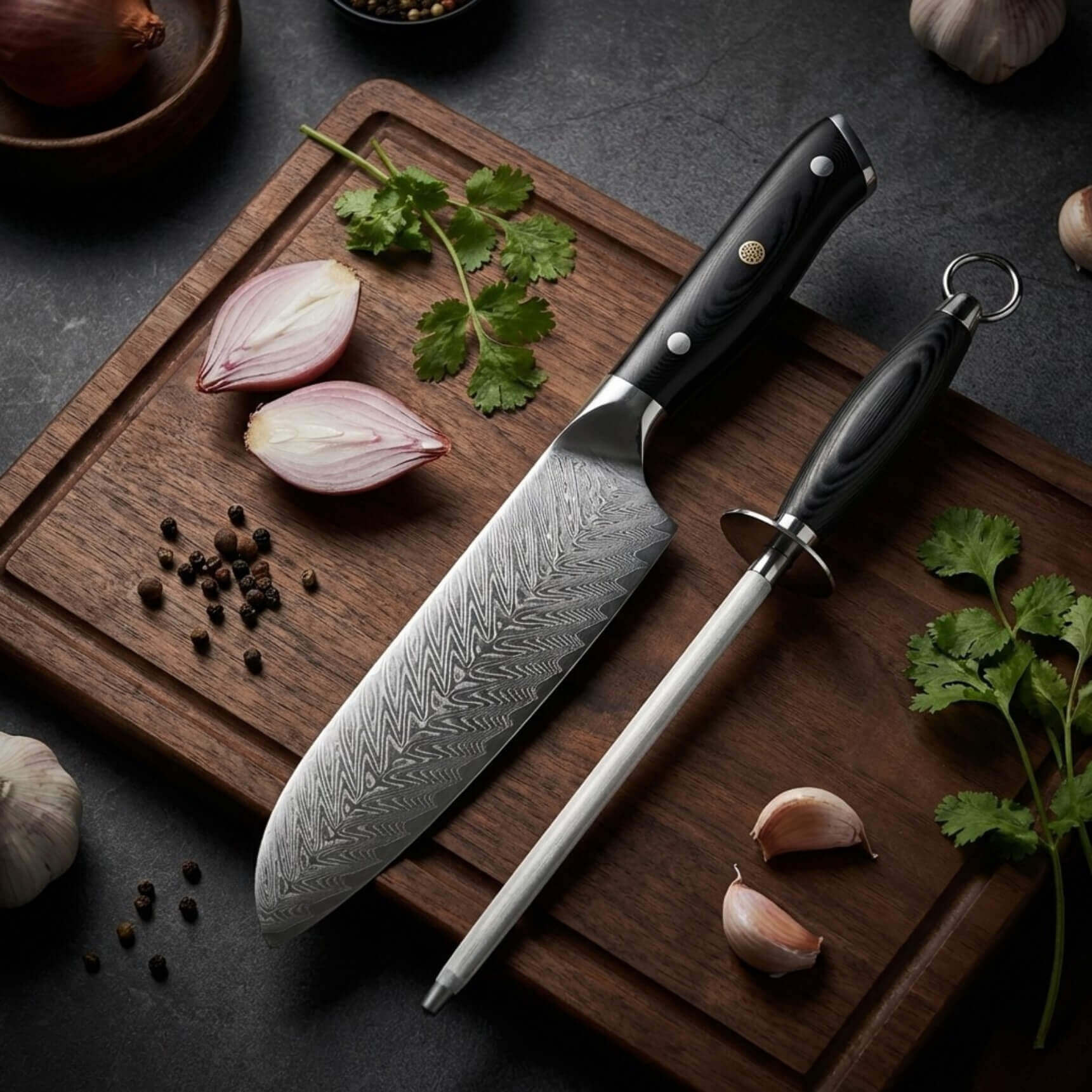
To maintain the performance of the 10CR15CoMoV steel, use a honing steel daily to realign the edge. When edge retention begins to weaken, a pass on a whetstone (3000/8000 grit) is essential to restore the native 15° angle without altering the blade geometry.
Handle Care: Preserving the Two-Tone Contrast
Dishwashers are strictly forbidden: harsh detergents and heat would permanently damage both the steel and the white epoxy resin handle, which may yellow over time. Hand washing with soapy water followed by immediate drying with a soft cloth is essential. This also preserves the clean contrast between the wood and resin sections - the Spectre II's visual signature.
The Kaitsuko Expert Verdict
The Spectre II is the Prestige collection variant we recommend to cooks looking for a premium Kiritsuke with a bright, clean visual identity. The light wood and white resin contrast brings a contemporary edge that suits both minimal professional kitchens and open domestic spaces where the knife stays on display.
What won us over during testing is the rigidity of the 60 HRC core, which delivers extremely precise tactile feedback — and the fact that the Spectre II's light handle particularly showcases the 67-layer Damascus pattern. Its K-Tip remains a formidable asset for delicate fish work or millimeter-precise julienne.
For cooks drawn to deeper or more saturated tones, the six other Spectre variants offer alternatives — but it's the Spectre II that defines the "light" end of the collection.
Technical Specifications
| Model | Spectre II, 2nd variation of the Spectre series (7 variants) |
| Collection | Prestige |
| Type | Kiritsuke (K-Tip) |
| Steel | 10CR15CoMoV (high-carbon core) |
| Hardness | 58–60 HRC |
| Construction | 67-layer Damascus |
| Sharpening angle | 15° per side |
| Handle | Light stabilized wood and white epoxy resin (signature two-tone) |
| Weight | ~175 g (6.2 oz) |

Our History
Kaitsuko knives are specially selected by our team of enthusiasts. They are designed to offer optimal comfort of use to those who use them. The blades are of impeccable quality .
The strength and durability of our knives will allow you to use them again and again!
They maintain an exceptional sharpness despite daily use.
Kaitsuko knives allow for clean and precise cutting of all your foods. Proper maintenance of your knives will extend their lifespan. This involves careful washing and good sharpening.
Do you have a question? Check out our FAQ to find the answer! If you have another question, our customer service will be happy to answer you from Monday to Friday at info@kaitsuko.fr
-
FAQ
The answer to all your questions HERE .
-
CUSTOMER SERVICE
Contact us Monday to Friday from 8am to 6pm at info@kaitsuko.fr
OUR MISSION
Discover our Prestige knife collection, which offers a range of high-end knives in different steels.
All designed to embody elegance, they are the result of unique know-how and combine quality materials with special manufacturing techniques.
Their design is unique and their aesthetics refined. Much more than simple kitchen tools, they are real fashion and decoration accessories, while offering an exceptional sharpness.


LEARN MORE
The use of each knife
Kiritsuke Knife : The Kiritsuke knife is a versatile knife that can be used for cutting a variety of foods. Its angled blade allows for precise cuts for slicing vegetables, meat, and fish.
Chef's Knife : The Chef's knife is a versatile tool that features a long, sharp blade, as well as a fine tip for precise and efficient cuts. It is an ideal knife for slicing, chopping, and chop all types of food.
Slicing Knife : The slicing knife is designed specifically for cutting thin slices of meat, poultry, or fish. Its long, narrow blade allows it to glide easily through food. It allows for precise cuts without tearing the food.
Bread Knife : The bread knife is designed to cut through different types of bread without crushing or tearing them. Its serrated blade allows you to slice cleanly through the crispy crust, without crushing the crumb inside.
Santoku Knife : The Santoku knife is also a versatile knife that is ideal for slicing, chopping and cutting different foods. With a wide, straight blade with a rounded tip, it has a large cutting surface. In short, the This knife is perfect for making multiple preparations in the kitchen.
Nakiri Knife : The Nakiri knife is specialized in cutting vegetables. Its straight, rectangular blade offers a wide cutting surface that is ideal for chopping, slicing and mincing precisely. It can also be used as a shovel knife to transfer vegetables into the flat.
Utility Knife : The utility knife is versatile. It is designed to perform several types of tasks in the kitchen. Its size, halfway between a chef's knife and a utility knife, makes it perfect for medium-sized cutting tasks, such as slicing fruit. , vegetables, cheese, peel, or even cut food into small pieces.
Boning Knife : The boning knife is specially designed to remove meat from bones with precision. Its rigid and narrow blade allows it to follow the contour of the bones, thus reducing meat waste.
Paring knife : The paring knife is ideal for precision tasks thanks to its small size and short, pointed blade. It is perfect for peeling and cutting fruits and vegetables, as well as for making delicate cuts. Versatile and handy, the paring knife is often used for detailed work that requires great precision. Whether it's for removing seeds from a fruit, coring tomatoes or chopping herbs, this knife is an essential companion for amateur and professional chefs.
Steak Knife : Steak knives, also called "table knives," are knives designed specifically for cutting cuts of meat during meals. They have a serrated blade that makes it easy to slice through pieces of meat without tearing the fibers.
Nordic Knife : Nordic knives are also known as Scandinavian knives. They are sturdy and versatile and can handle a wide range of kitchen tasks. They can also be used for cutting wood or preparing food during cooking sessions. hunting or camping.
Knife maintenance
- Never put knives in a dishwasher.
- Wash knives by hand and wipe the blade thoroughly with a soft, dry cloth to maintain the efficiency and quality of the blade.
- Clean the blades with soapy water.
- If the knives have wooden handles, dry them thoroughly before storing.
- Knives do not stay sharp for life, no matter the blade; it is therefore advisable to sharpen them as soon as the edge becomes less sharp.
- Do not use the edge of the knife to push food onto the board. Use the back of the blade instead.
- Never use the abrasive side of sponges to clean blades.
- Cut food on a wooden board to avoid damaging the blade of your knives.
- Do not make any cuts in a pan or baking dish to avoid damaging the blade of the knives.
COMPLETE YOUR PURCHASE


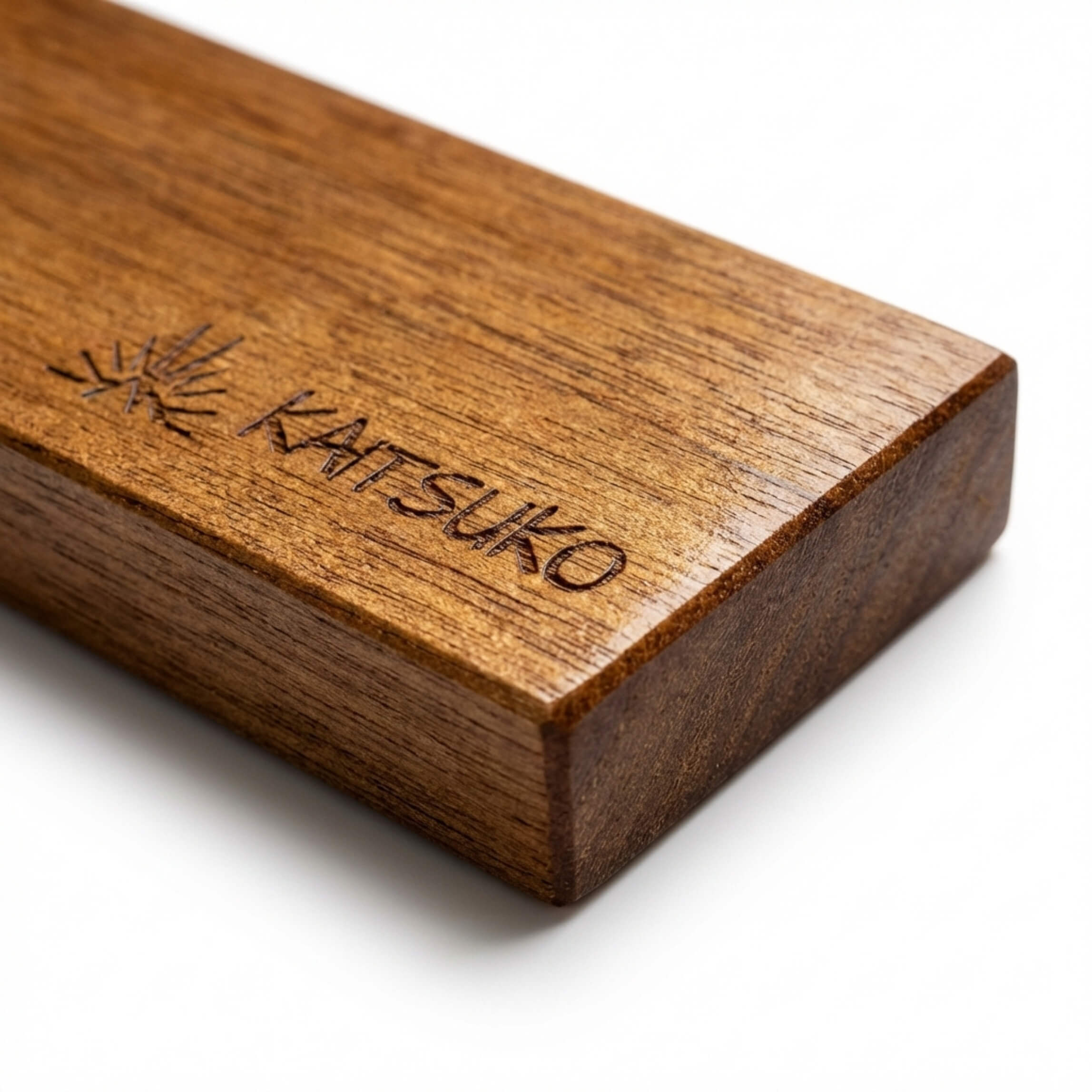
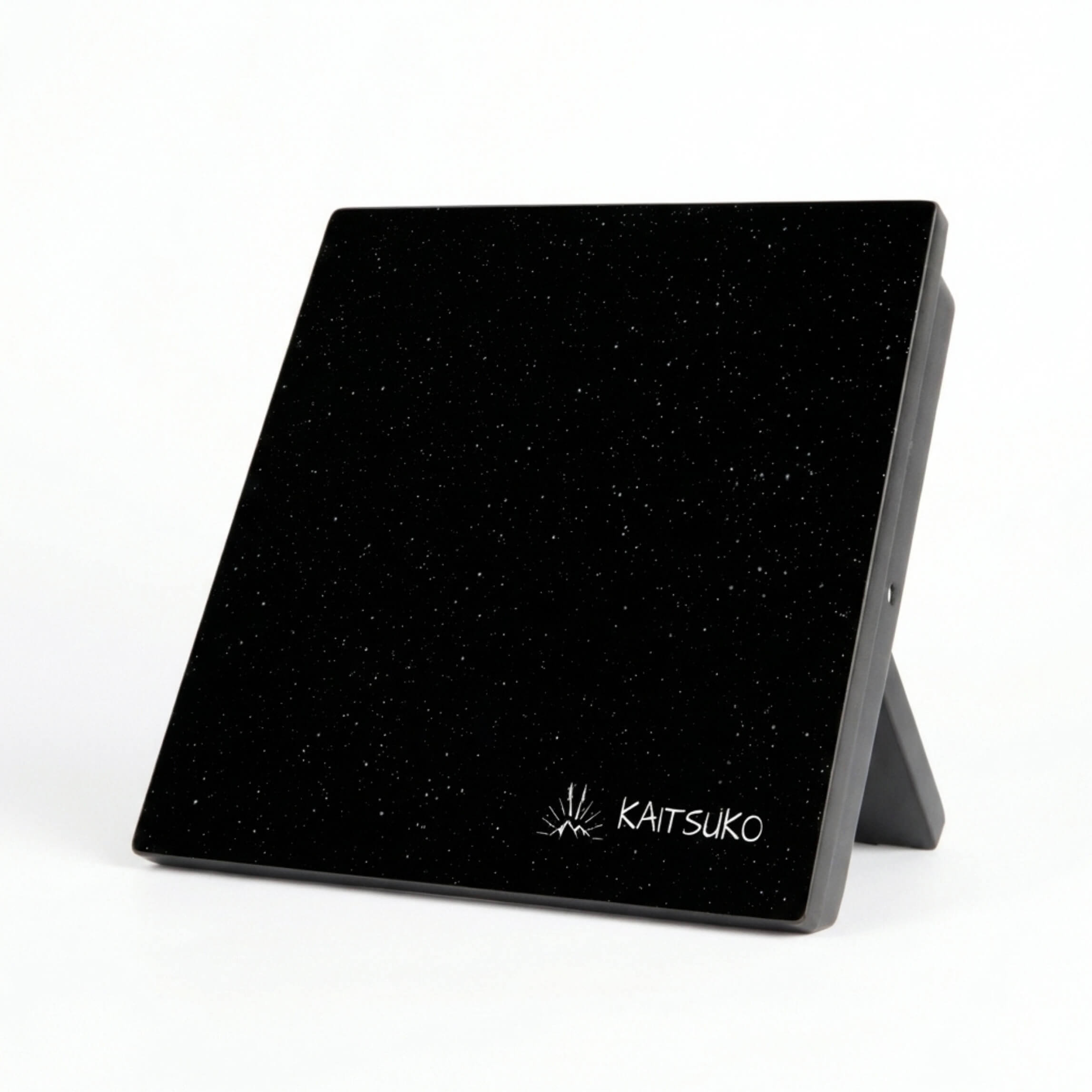
Magnetic Wall Mount Knife Holder


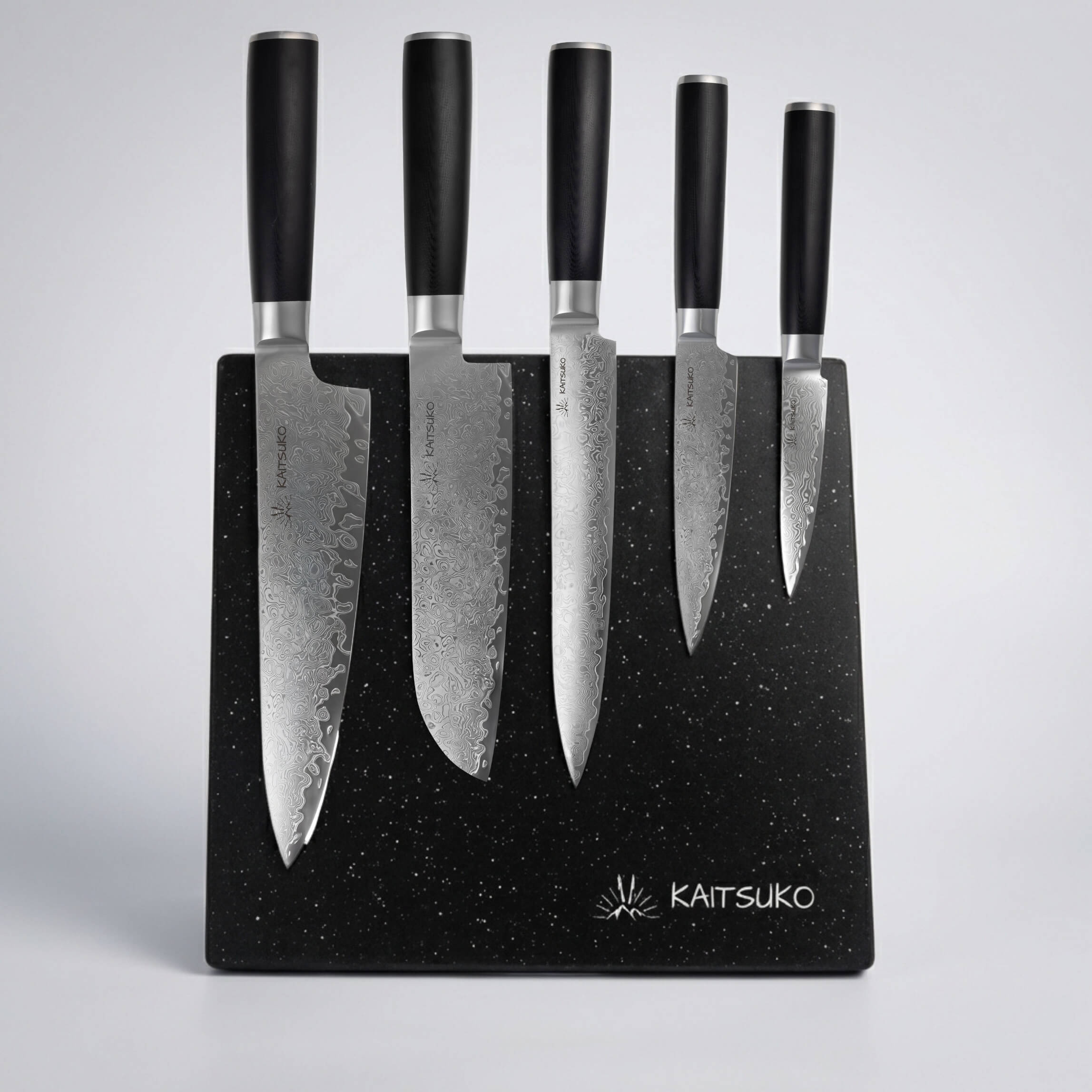


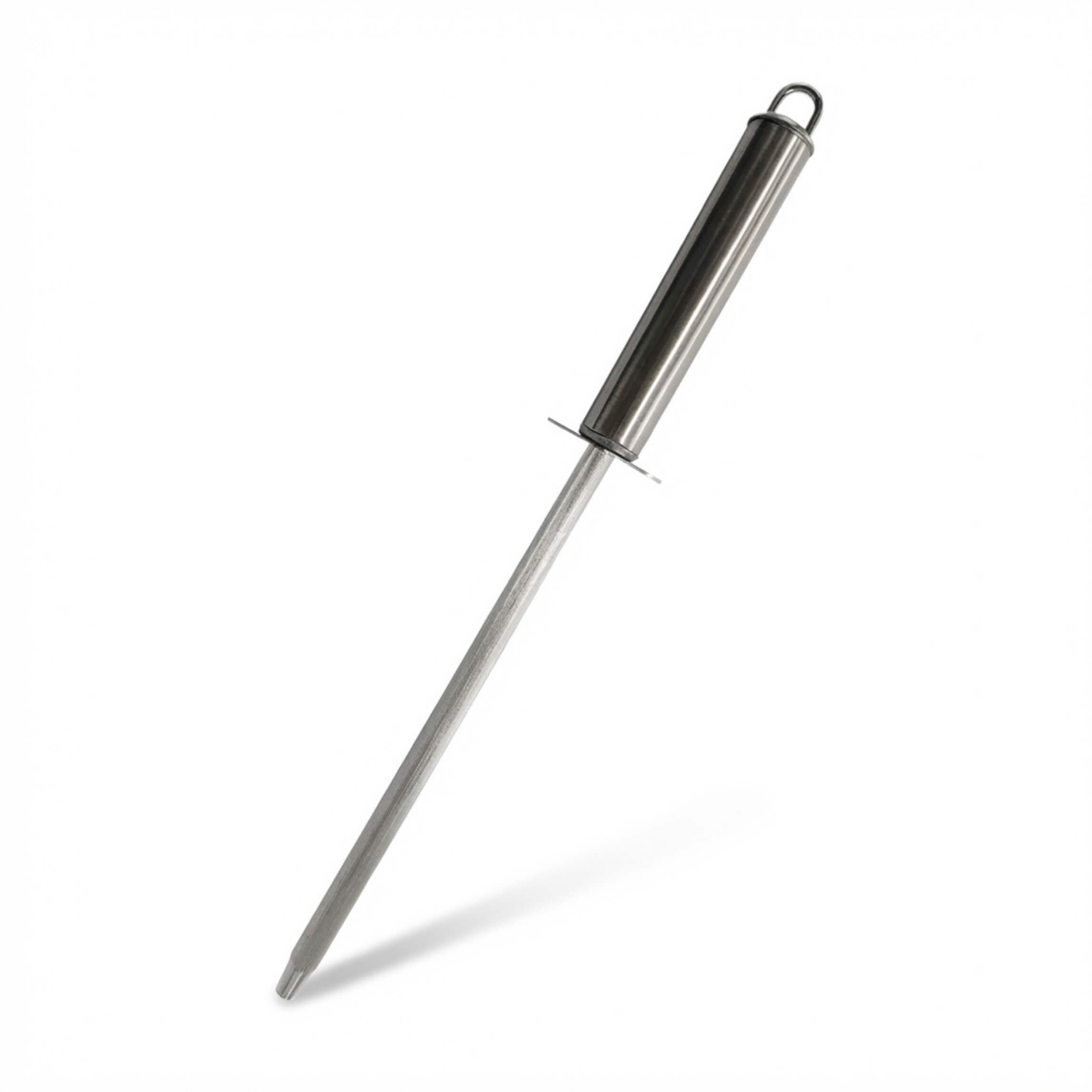
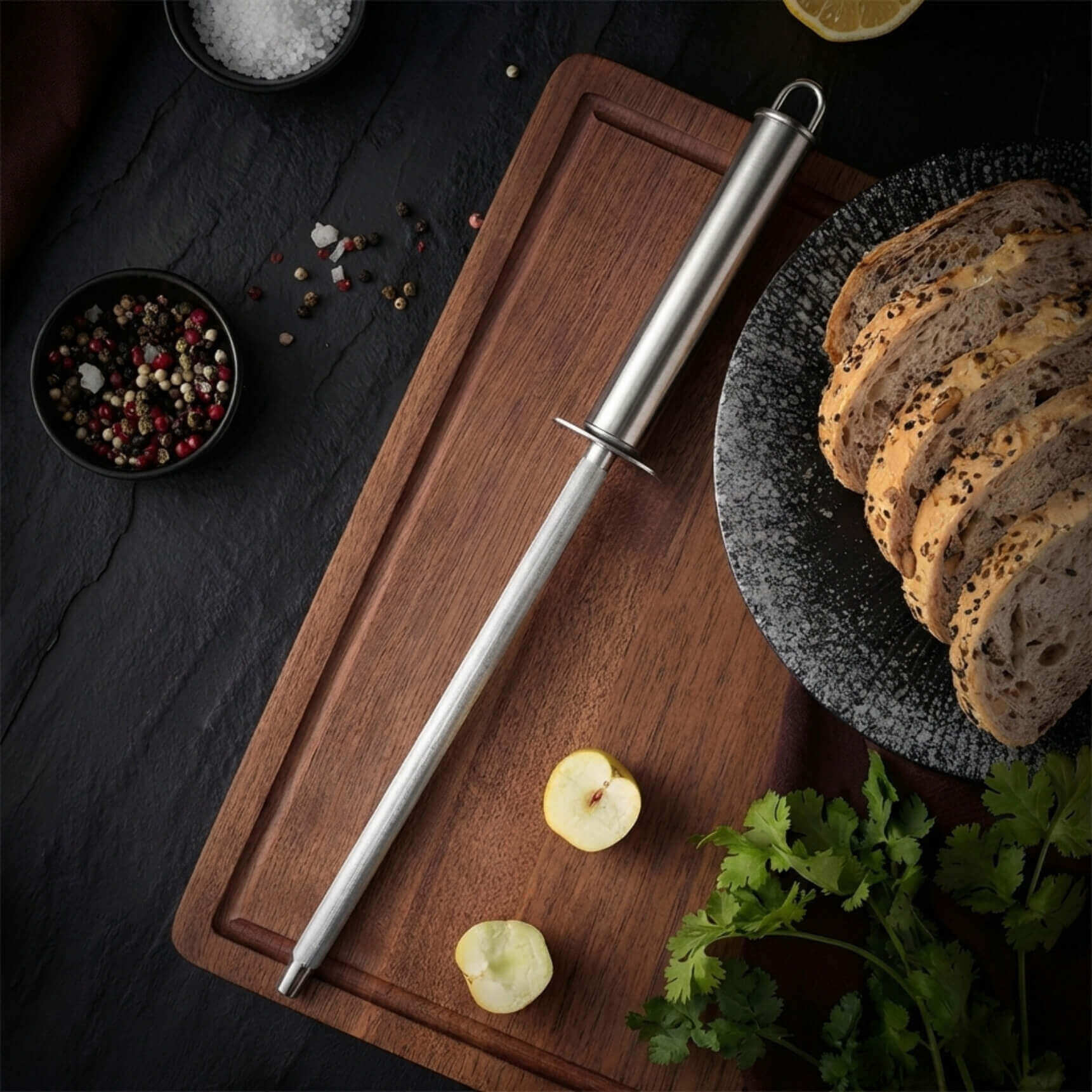
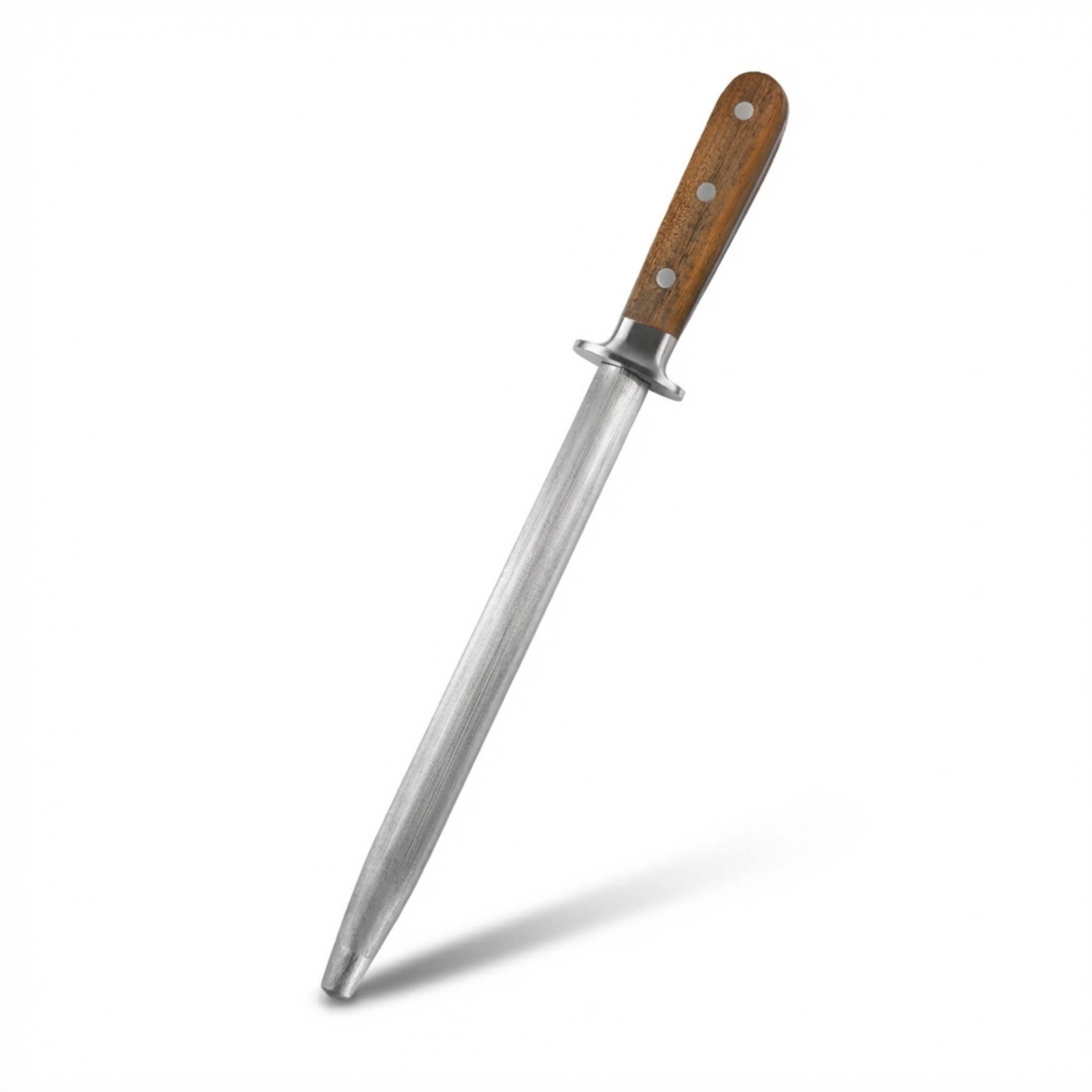
Sharpening steel - Wooden handle