





Boning knife - Yellow Sea Series


Set of 7 Japanese knives - Yellow Sea Series

Bread knife - Yellow Sea series


Santoku Knife - Yellow Sea Series
Chef's knife - Yellow Sea series

Set of 3 Japanese knives - Yellow Sea Series

Set of 2 Japanese knives - Yellow Sea Series
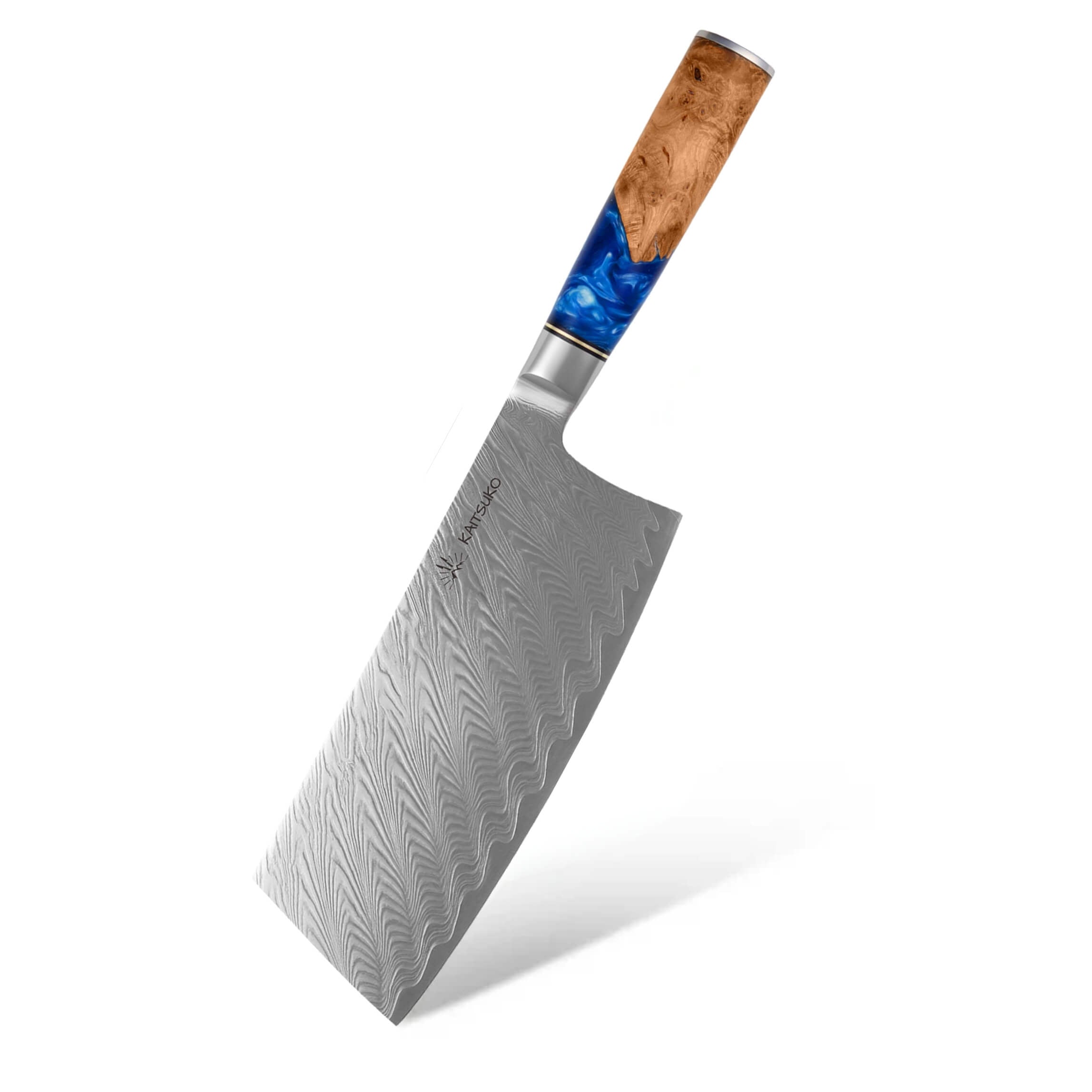
The Yellow Sea series represents the perfect balance between bold aesthetics and uncompromising technical precision. Designed for demanding cooks, this collection stands out through its hybrid handles in stabilized wood and blue epoxy resin, encapsulating a high-performance blade.
At Kaitsuko, we selected 10CR15CoMoV steel for this range, guaranteeing surgical cutting precision and exceptional durability.
What is the Yellow Sea Collection and its Characteristics?
This limited series is the result of a rigorous selection aimed at offering a work tool as high-performing as it is visually captivating. It is aimed at both professional chefs and passionate craft enthusiasts.
- Each blade is forged using the San Mai technique, with a 10CR15CoMoV steel core protected by 67 layers of Damascus steel.
- 10CR15CoMoV steel is enriched with cobalt and carbon (1.05%), enabling a hardness of 60±2 HRC to be reached. This multi-layer structure does not merely serve aesthetics; it provides the flexibility needed to protect the hard and brittle core of the blade.
- The exceptional sharpness is achieved through a narrow sharpening angle between 15° and 18°. In hand, the balance between blade and handle reduces fatigue during prolonged cutting sessions.
- Featuring a hammered Damascus finish, the Yellow Sea series is ideal for those seeking a unique handcrafted knife capable of maintaining a razor edge over a very long period (superior edge retention).
The Different Yellow Sea Knife Types and Their Uses
To cover all culinary needs, the collection comes in several specific blade profiles.
The Chef's Knife and the Large Chef's Knife
The Yellow Sea series offers two variants of its versatile tool: the standard Chef's Knife and the Large Chef's Knife, capable of handling dense proteins and large vegetables.
The Santoku and the Nakiri: the Vegetable Experts
- The Santoku ("three virtues"): With its shorter blade and flat profile, it excels at rapid chopping and fine slicing.
- The Nakiri: A true Japanese vegetable cleaver, its rectangular shape allows a clean cut all the way to the board, without any rocking motion, for ultra-fast work.
Precision Work and Specific Cuts
- Boning knife: Its rigid, fine blade is profiled to work close to the bone and remove sinew with surgical precision.
- Bread knife: Essential for hard crusts, its teeth are sharpened to penetrate without crushing the crumb.
- Utility knife: The perfect bridge between the paring knife and the chef's knife, ideal for medium cuts requiring maneuverability and sharpness.
Comparison: Yellow Sea, Other Series and Western Knives
Yellow Sea vs Chef Tanaka and Yakumoto
Unlike the Chef Tanaka range in 5CR15MoV steel (more robust and easy to maintain for beginners), the Yellow Sea series demands more careful attention but offers a significantly finer edge. Compared to the Yakumoto or Kyoto series, the difference is primarily aesthetic, with the Yellow Sea series betting on the brilliance of blue epoxy resin.
Superiority over Western Models
The knives of the Yellow Sea series are lighter than standard Western models. Their sharper cutting angle and steel hardness (60 HRC versus 55-56 for Western knives) allow penetration into food without crushing fibers, thus preserving flavors.
Care and Maintenance: Preserving the Exceptional Edge
A premium Japanese knife is a lasting investment that requires a strict maintenance protocol.
- Cleaning: Mandatory hand washing with soapy water and a soft sponge. Dishwashers are strictly prohibited, as detergents and heat damage the steel's temper and the wooden handle.
- Drying: Immediate drying with a soft cloth is imperative to prevent any corrosion, even on so-called stainless steels.
- Sharpening: We recommend regular sharpening on a quality whetstone (1000/3000 grit). The use of a ceramic honing steel can be useful for daily edge maintenance.
- Storage: To avoid impacts, use a knife block, magnetic bar or blade guard.
FAQ: Kaitsuko Expertise at Your Service
What accessories for my Yellow Sea series?
We recommend using a wooden board (teak or acacia) to avoid dulling the blade. For transport, a dedicated transport bag will protect your 67 Damascus layers.
Why choose a set rather than a single knife?
Buying as a set (2, 3, 5 or 7-knife set) allows substantial savings (up to 32%) while guaranteeing technical and aesthetic consistency in your kitchen.
How to recognize the quality of Kaitsuko steel?
Every knife in the Yellow Sea series displays unique patterns from the forging process. The mention of 10CR15CoMoV steel and HRC hardness on our technical data sheets is your guarantee of performance.