



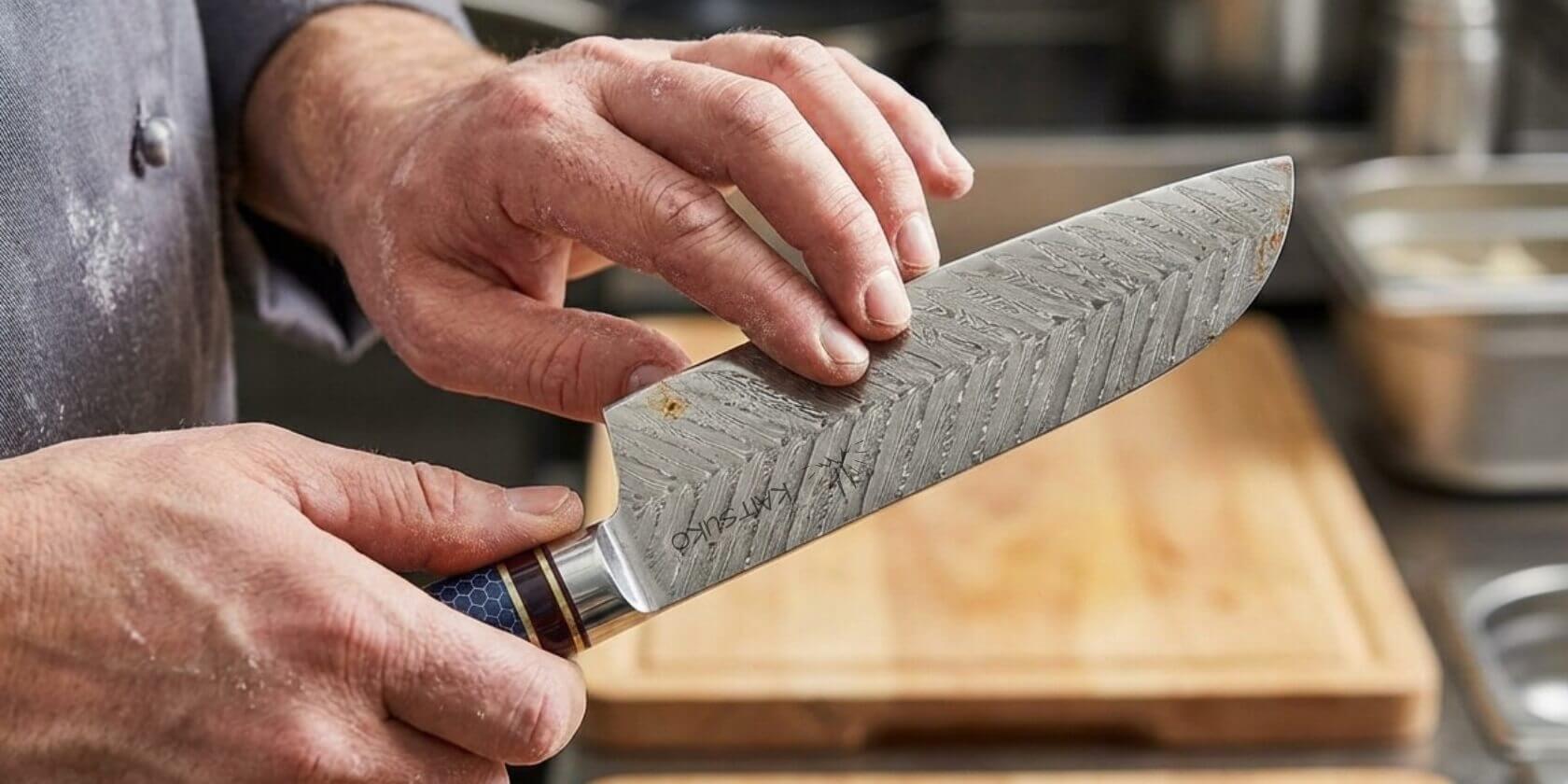
Discovering rust on a knife can cause genuine concern, especially when it involves a beautiful kitchen blade. Many people immediately assume their knife is irreversibly damaged.
In the majority of cases, however, that is far from true.
Rust is a natural phenomenon that can appear on certain types of steel, particularly high-carbon steels used in premium Japanese cutlery. But a thin surface oxidation is generally not serious. With the right techniques, it is often possible to perfectly restore the blade.
However, certain methods found online can cause more damage than the rust itself. Aggressive products, unsuitable abrasives or overly rough handling can damage the blade finish or alter the edge.
In this article, we will look at the safe methods for removing rust from a blade, as well as the most common mistakes to avoid.
Why Rust Appears on Certain Knives
Before discussing solutions, it is important to understand why rust can appear.
Not all steels react the same way to moisture. Stainless steels contain a significant proportion of chromium that naturally protects the blade against corrosion.
High-carbon steels, on the other hand, which are highly valued in Japanese cutlery for their exceptional sharpness, can be more sensitive to moisture if the blade stays wet for too long.
This does not mean these knives are of poor quality. On the contrary.
High-carbon steels are capable of reaching a superior hardness, enabling an extremely fine and precise edge. This is precisely the characteristic that makes them so popular among professional chefs and cooking enthusiasts.
But like any high-performance material, they simply require appropriate care.
In most cases, rust that appears on a blade is only surface oxidation, which is very easy to treat.
Method 1: Baking Soda
Baking soda is one of the simplest and safest solutions for removing light rust.
Simply mix a small amount of baking soda with a few drops of water to create a slightly abrasive paste. Applied to the rusty area, this paste removes the oxidation without damaging the blade surface.
Use a soft cloth or non-abrasive sponge and gently rub the affected area. The rust generally disappears within a few minutes.
After cleaning, simply rinse the blade and dry it immediately.
This method works particularly well for early-stage oxidation.
Method 2: White Vinegar
White vinegar is another effective ally against rust.
Its acidity gradually dissolves the oxidation. To use it, simply soak a cloth in white vinegar and gently rub the affected area.
For more pronounced rust, you can also let the vinegar work for a few minutes before cleaning the blade.
Be careful not to soak the blade for too long, however. Prolonged exposure could alter the finish of certain knives.
After use, it is essential to rinse and dry the blade thoroughly.
Method 3: Lemon and Salt
This traditional method also works very well.
The lemon provides the necessary acidity to attack the rust, while the salt acts as a very light abrasive.
Simply sprinkle a little salt on the rusty area then rub with a halved lemon. The combined action of the two ingredients removes the oxidation progressively.
This technique is simple, natural and very effective on light rust.
Method 4: The Whetstone
For kitchen knives, the whetstone can also be used to remove certain oxidation marks.
A fine stone cleans the blade surface while lightly refreshing the edge.
This method is particularly suited to Japanese knives, whose maintenance often relies on regular use of whetstones.
However, it is important to use a quality stone and correct technique, so as not to alter the sharpening angle.
Method 5: The Rust Eraser
Rust erasers are specially designed to remove oxidation from blades.
They act like a very soft abrasive eraser that eliminates rust without scratching the surface.
This is a solution highly appreciated by cutlery enthusiasts, as it allows rust to be treated with precision.
Method 6: Very Fine Steel Wool
For more persistent rust marks, it is possible to use very fine steel wool (grade 0000).
This wool removes oxidation while remaining relatively gentle on the metal surface.
It is important to rub gently and always in the direction of the blade to avoid visible scratches.
This method must be used with caution on blades with a polished or Damascus finish.
Method 7: Food-Grade Oil
Once the rust has been removed, applying a thin layer of food-grade oil can help protect the blade.
This protection is particularly useful for knives made from high-carbon steels.
A single drop of oil spread with a cloth is generally enough to create a protective barrier against moisture.
Methods to Absolutely Avoid
Some popular techniques found online can seriously damage a blade.
Aggressive chemical products such as bleach or certain industrial cleaners can attack the steel and degrade the finish.
Abrasive sponges or overly coarse sandpaper can also scratch the blade surface deeply.
Finally, avoid scraping rust off with hard metal objects such as a knife or screwdriver. This type of action can cause irreversible damage.
When you own a quality knife, particularly a Damascus or high-carbon steel blade, it is better to use gentle and controlled methods.
How to Prevent Rust on a Knife
The best solution obviously remains prevention.
A few simple gestures make it possible to almost completely avoid the appearance of rust.
After use, it is recommended to quickly rinse the blade and dry it immediately with a clean cloth.
It is also advisable to avoid leaving a knife soaking in the sink or storing it while still damp.
These simple gestures are generally enough to perfectly preserve a blade for years.
Good Steel Remains Living Steel
In Japanese cutlery, a blade is often considered a living object.
High-carbon steels, particularly when used in Damascus steel structures, offer exceptional cutting performance. But they also react more to their environment.
This interaction with food and moisture is part of the character of the knife.
With simple maintenance and a few precautions, these blades can preserve their sharpness and beauty for a very long time.
This is precisely the reason why knives made with premium high-carbon steels and Damascus structures are today considered one of the references in culinary cutlery.
The 7 mistakes that ruin a japanese knife's edge (and how to avoid them)